IS DEODORANT DEAD? — India’s Fragrance Market Undergoes a Structural Shift
 IS DEODORANTDEAD?This report contains proprietary insights based on consumer survey data gathered by PulseAI Research.Unauthorized use, distribution, or reproduction of this document or any part thereof is strictly prohibited.© 2025 PulseAI Research. All rights reserved.India’s Fragrance MarketUndergoes a Structural Shift
 Table of Contents01EXECUTIVE SUMMARY02RESEARCH OVERVIEW & SCOPE03MARKET OVERVIEW04CONSUMER SEGMENTATION05CONSUMER INSIGHTS ANALYSIS06STRATEGIC RECOMMENDATIONS07FUTURE OUTLOOK27241109060301
 ExecutiveSummary0101
 Price sensitivity remains entrenched — with 60% of consumers unwilling to spend beyond₹500, and 75% staying under ₹1,000. Instead, the shift is toward value-driven performance:accessible perfumes that deliver confidence and long wear without stretching wallets.This has profound implications:02India’s fragrance market is at a structuralcrossroads. Once the undisputed entry pointfor millions of consumers, deodorants are fastlosing ground. The data reveals a decisivemigration: perfumes (Eau de Parfums) arenow the most popular fragrance type,signalling that consumers no longer seedeodorants as sufficient for their daily needs.At the heart of this migration is longevity. ForIndian fragrance buyers, lasting poweroutranks both brand and price as the singlemost important purchase driver. Deodorants,long positioned as “everyday freshness,”simply underdeliver against this demand,while affordable EDPs promise premium-likeperformance at mass price points. But this isnot a story of luxury premiumisation.The structural shift is clear: from hygiene-led deodorant usage to performance-orientedfragrance consumption. For brands, the growth opportunity no longer lies in defendingdeodorant volumes but in cracking the affordable EDP segment — a category that isredefining India’s fragrance future.Deodorants are ceding their role as the default value-category choice.Affordable EDPs are emerging as the new mainstream, bridging the gap between massaffordability and premium expectations.Trial culture is accelerating the transition — 70% of consumers prefer to testfragrances before committing to full-size bottles, and it’s EDP minis, not deodorantsprays, capturing this behaviour.
 02ResearchOverview& Scope03
 042.1 Research ObjectivesThe study is set out to decode the shifting dynamics of India’s fragrance market, with afocus on the structural decline of deodorants and the rise of affordable Eau de Parfums(EDPs).Key objectives include:Understand how usage patterns are changing from hygiene-led deodorant use toperformance-driven perfumes.Analyse purchase behaviours across price points, trial formats, and retail channels.Examine the role of longevity, price sensitivity, and trial-first behaviour in drivingconsumer choices.Profile the segments of consumers leading this shift towards affordable, performance-oriented EDPs.
 052.2 Methodology2.3 ScopeThe study used a quantitative online survey, targeting 1,000 urban and semi-urban Indianconsumers aged 18-45. Key elements include:The research covers India’s fragrance market in transition, focusing on:Survey Type: Structured questionnaire withclosed-ended and Likert scale questions.Sample: 1,000 respondents, balanced acrossdemographics and regions (Tier 1, 2, and 3cities).Duration: 72-Hour data collection period.Categories: Perfumes (EDPs), deodorants,body mists, and scented oils.Key Drivers: Longevity, price sensitivity, trial-first discovery, and brand trust.Consumer Segments: Personas reflecting theshift from deodorant dependence to perfumepreference.
 03MarketOverview06
 073.1 Fragrance Industry Landscape3.2 Consumer Behavior TrendsIndia’s fragrance industry is at an inflection point. Once propelled by deodorants as themass gateway to fragrance, the market is now undergoing a structural realignment towardaffordable EDPs.Growth drivers include:Rising focus on personal grooming and confidence-building.Higher disposable incomes in urban and semi-urban India.Increasing awareness of long-lasting perfumes as everyday essentials.What’s changing is not demand itself, but where consumers are spending: from short-liveddeodorants to performance-driven perfumes that deliver endurance without breachingeveryday budgets.Consumer habits reflect this transition clearly:E-commerce dominance: 70% now buy fragrances online, reinforcing access toaffordable perfumes across geographies.Social influence: Recommendations from peers and influencers drive discovery,accelerating the adoption of perfumes as daily wear.Trial-first mindset: 70% of consumers prefer to test before buying full-size.Deodorants once played this “entry role,” but today it’s EDP minis that fulfil this need.From hygiene to performance: Fragrance is no longer just about freshness — it’s aboutlasting power and self-expression.
 083.3 Challenges and OpportunitiesDeodorant Decline: Deodorants are losing relevance as consumers upgrade toaffordable perfumes. Their traditional role in the value segment is being eroded.Price Sensitivity: With 75% capped under ₹1,000, mass consumers remaincautious spenders.Affordable EDPs: The sweet spot lies in perfumes priced ₹500–₹1,000 that deliverpremium-like performance.Trial & Discovery:Brands that scale miniature EDPs and sampler formats can winearly adoption and build loyalty.ChallengesOpportunities
 0904ConsumerSegmentation
 10PersonaThe TrendSeeker18-24years₹15,000 -₹30,000Urban,Tier 1citiesFollows latestfragrance trends,influenced bysocial media.Buys trial-sizedor affordablefragrances,prefers onlineplatforms.Purchases full-sized bottlesfrom trustedstores or onlineretailers.Buys mid-rangefragrances, oftenin-store,attracted bypromotions.Willing to pay apremium forsustainableproducts, shopseco-consciousbrands.Prefers premium,long-lastingscents; loyal toestablishedbrands.Seeks value formoney, classicscents foreveryday use.Focuses onsustainability,ethical sourcing,and eco-friendlypackaging.Urban,Tier 1citiesUrban,Tier 1citiesTier 2and Tier3 cities₹30,000 -₹60,000₹30,000 -₹80,000₹40,000 -₹80,00025-34years35-45years30-45yearsThe LoyalCollectorThePracticalShopperThe Eco-consciousConsumerAgeMontlyIncomeLocationKey TraitsBuying Habit
 1105ConsumerInsightsAnalysis
 12Strategic Implications for Brands:Reposition perfumes as the default daily fragrance, not an occasional luxury.Invest in affordable EDP lines to capture consumers shifting away from deodorants.Scale miniature EDP formats to reinforce trial-first adoption.Accept that deodorant growth will flatten; future volume lies in perfumes.5.1 Scented Choices: What Consumers Love5.1.1 Top Fragrances Consumers are Reaching ForPerfumes (Eau de Parfums) have overtaken deodorants as the most preferredfragrance type, marking a structural change in the category. While deodorants oncedefined everyday usage, consumers are clearly migrating toward EDPs for long-lastingperformance. Deodorants, still present in the mix, are increasingly being sidelined asbuyers seek value and endurance in their daily wear.
 13Strategic Implications for Brands:Frame perfumes as confidence essentials, not just occasion-based indulgences.Communicate the long-wear emotional payoff (confidence, self-expression).Shift messaging from hygiene-led deo cues to performance-led perfume cues.Build daily-use EDP campaigns that replace deo’s old narrative of “everydayfreshness.”5.1.2 Why Consumers Wear FragranceFragrance use in India is no longer only about freshness. Consumers primarily use scentsto feel confident and carry lasting impact throughout the day. Deodorants, built aroundinstant freshness, fall short in delivering this benefit, while perfumes now occupy thecentral role in daily grooming rituals.
 14Strategic Implications for Brands:Deliver classic scent profiles in affordable EDPs.Use deodorant-style freshness cues but anchor them in perfume formats.Innovate hybrids (e.g., deo + perfume crossover) only if longevity is guaranteed.Tie exclusivity to EDPs, not deodorants, as the “aspirational yet affordable”space.5.1.3 The Scents That SellFloral and woody fragrances remain the most sought-after, but the shift lies in format, notscent profile. Consumers still love familiar, classic scents — but they increasingly wantthem in perfume form rather than deodorant sprays. Fruity and oriental notes are growingas niche add-ons, but longevity-first perfumes dominate usage occasions.
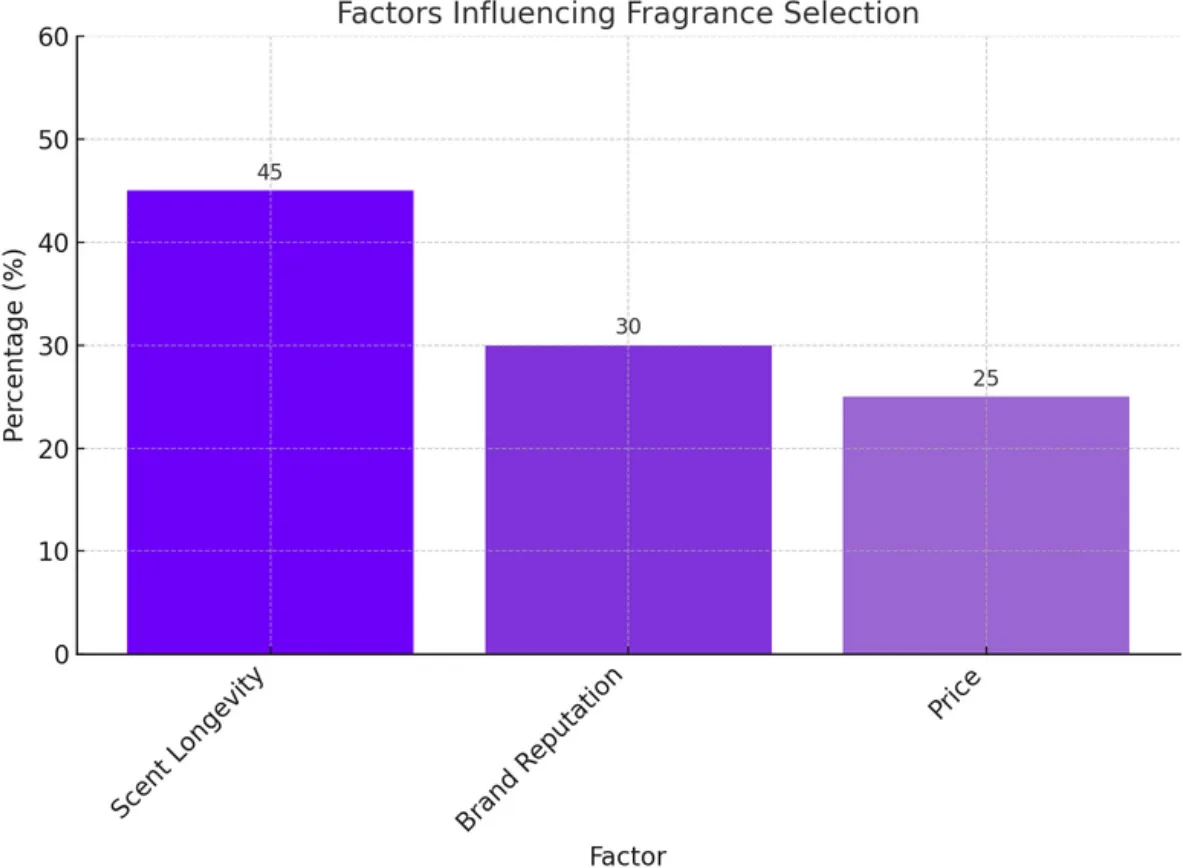
 15Strategic Implications for Brands:Make longevity the hero claim across perfume packaging and campaigns.De-prioritise deo-led promises of “freshness hours”; focus on EDPs with lastingwear.Build trust through transparent sourcing, but link it back to performance value.Introduce tiered perfumes under ₹1,000 to make endurance accessible.5.1.4 What Drives Fragrance DecisionsLongevity is the number one purchase driver for Indian fragrance buyers, ahead ofbrand reputation and price. This single insight explains deodorant’s decline: consumersno longer accept short-lived freshness when affordable perfumes deliver all-dayperformance. Price and trust still matter, but endurance defines choice.
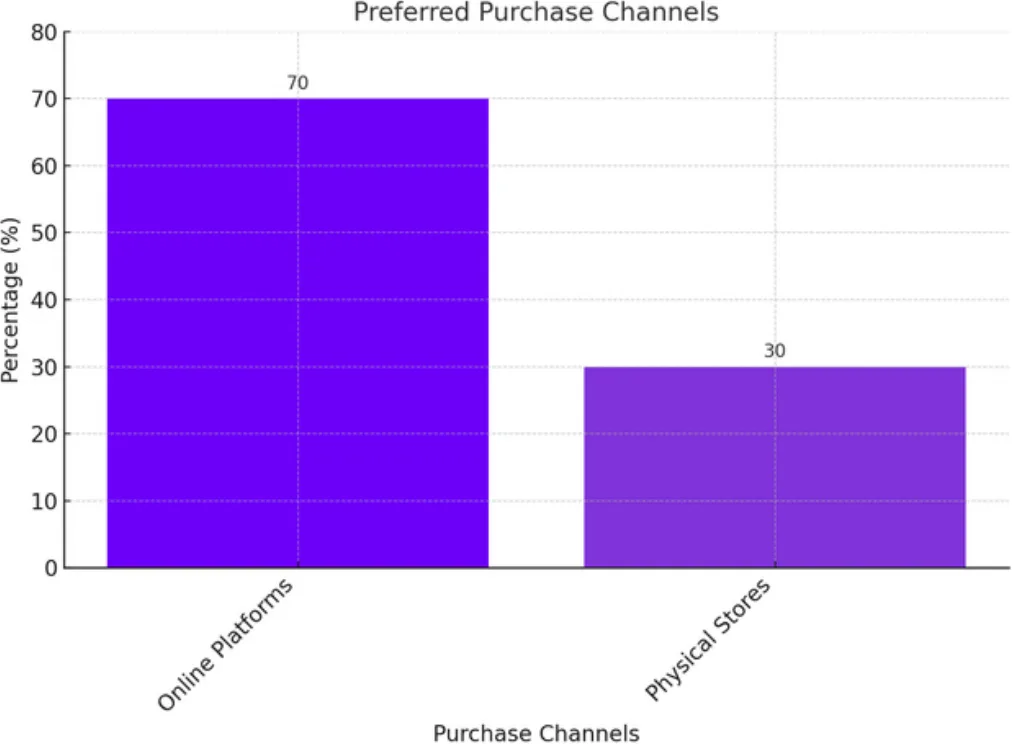
 16Strategic Implications for Brands:Strengthen e-commerce presence for perfumes, especially affordable EDP SKUs.Use online visibility to position perfumes as the new mainstream, not deos.Build omnichannel experiences, but make perfumes the hero product acrosstouchpoints.Ensure offline sampling focuses on perfume trial packs, not deodorant testers.5.2 How Consumers Shop for Fragrances5.2.1 Where Consumers Buy Their ScentsOnline platforms dominate fragrance purchases, with 70% of buyers preferring e-commerce for convenience, variety, and value. This shift is accelerating the rise ofaffordable perfumes, which are now widely accessible across digital marketplaces.Physical retail, while still relevant, plays a secondary role — particularly for deodorants,whose mass in-store dominance is being overshadowed by EDP discovery online.
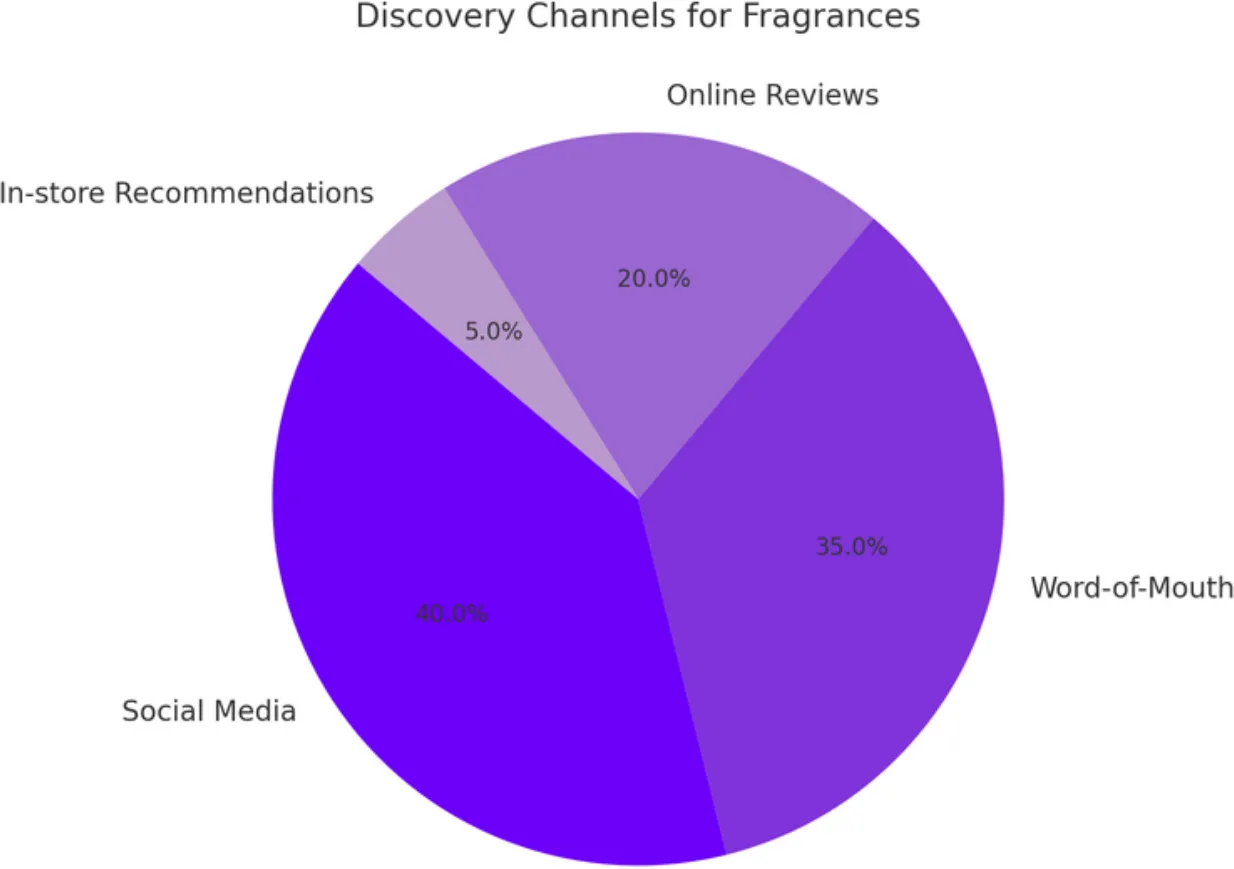
 17Strategic Implications for Brands:Build social-first campaigns around perfumes, not deos.Encourage peer-led trial sharing through mini EDP gifting and referral packs.Prioritise influencer collaborations that validate longevity claims.Phase out deo-led discovery campaigns; focus messaging on affordable perfumes.5.2.2 How Consumers Discover New FragrancesDiscovery is now peer- and social-led, with 40% relying on social media and 35% onword-of-mouth. This trend strongly benefits perfumes, as influencer endorsementsand peer trials often spotlight EDPs with long-lasting performance. In-store discovery,once the strength of deodorant displays, is fading into insignificance.
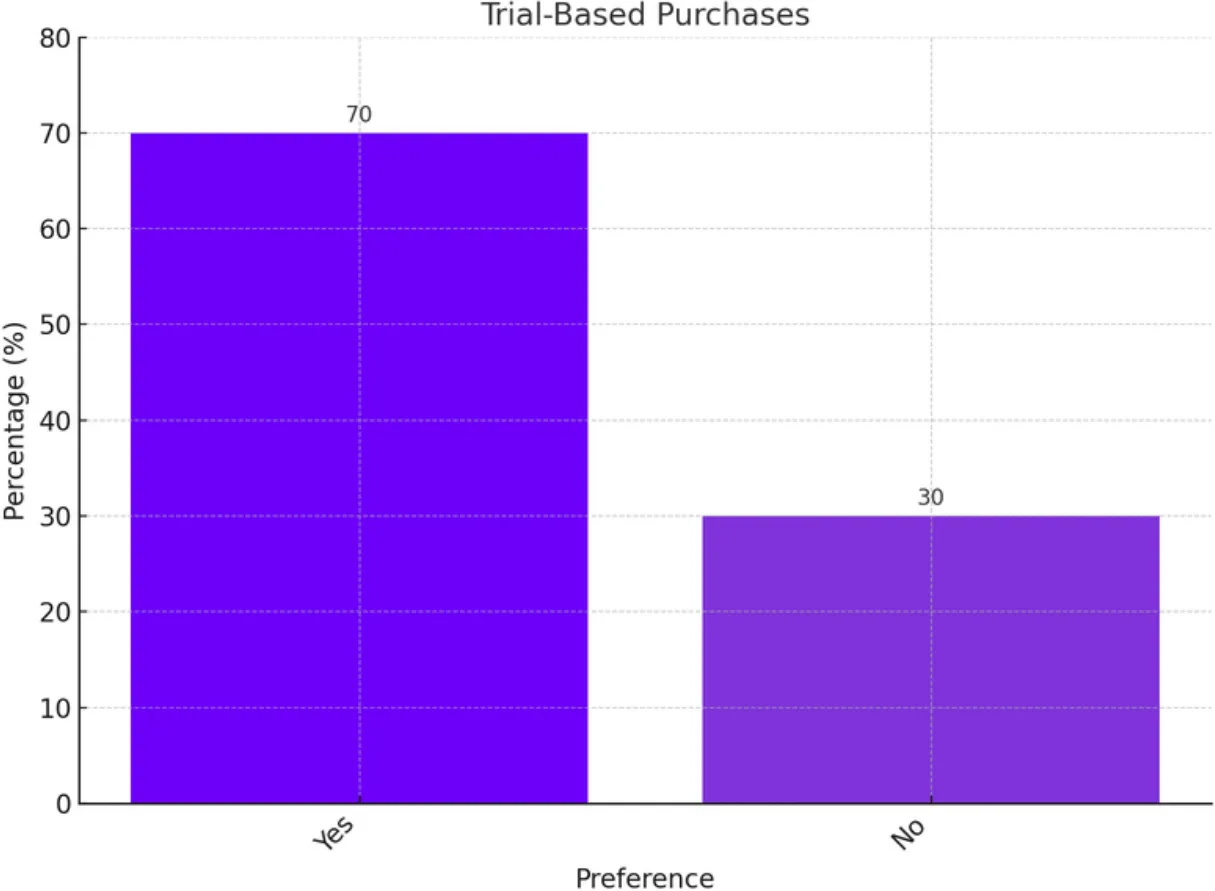
 18Strategic Implications for Brands:Scale miniature EDP formats as the new trial engine.Bundle perfumes into affordable trial kits to replace deo-led sampling.Build subscription or discovery models around perfume minis.Use trial-first pathways to accelerate migration from deodorant to perfume5.2.3 The Power of Sampling: Try Before You Buy70% of consumers prefer trial-based purchases before committing to full-size bottles.Historically, deodorants acted as this low-risk trial entry point. Today, it’s EDPminiatures and sampler packs that fulfil this role — capturing trial-first behaviour andshifting the discovery funnel decisively toward perfumes.
 19Strategic Implications for Brands:Broaden perfume portfolios instead of stretching deo lines.Anchor innovation in EDP formats with new scent combinations.Embed eco-friendly practices in perfume packaging, reinforcing value +responsibility.Position deodorants as secondary add-ons, not the brand’s core offering.5.3 What Consumers Think AboutFragrance Brands5.3.1 The Brand Qualities Consumers Value MostConsumers value variety of scents (35%), innovation (30%), and eco-friendliness(25%). But in the context of the deodorant-to-EDP shift, these qualities are beingsought within perfumes, not deodorants. Variety and freshness once defined deo aisles— now consumers expect the same breadth and innovation in affordable EDPs thatdeliver longevity.
 20Strategic Implications for Brands:Launch affordable customised EDP services (e.g., scent quizzes, DIY kits).Make personalisation a perfume-only proposition, not stretched to deos.Use limited-edition EDPs to create exclusivity and collectability.Tie personalisation back to long-lasting value, not short-lived deo refresh.5.3.2 The Demand for Custom Perfume ExperiencesHalf of consumers show interest in custom blends and tailored scent profiles.Personalisation demand is gravitating towards perfumes, where longevity and varietyallow for richer experiences. Deodorants, limited by format and performance, are nolonger viewed as the space for individuality — customisation belongs to EDPs.
 21Strategic Implications for Brands:Position ₹500–₹1,000 perfumes as the new “mass market” core.Offer tiered EDP lines (minis, mid-size, full-size) to capture every budget step.Retire deo-led “value” messaging; instead, push perfumes as bettervalue-for-money.Use pricing experiments to optimise the sweet spot for affordable EDPs.5.4 What’s Next for Fragrance: ConsumerTrends Ahead5.4.1 The Price Tag That Fits55% of consumers prefer fragrances priced under ₹500, 30% are comfortable between₹500–₹1,000, and only 15% go above ₹1,000. This entrenched price sensitivity showswhy deodorants can no longer anchor the value segment. Consumers now expectperfume-level performance within these price brackets, shifting their spend away fromdeos to affordable EDPs.
 22Strategic Implications for Brands:Lead sustainability narratives with perfume innovation, not deodorant claims.Invest in refillable or recyclable EDP packaging in the ₹500–₹1,000 range.Tie eco-friendly cues to the “lasting value” promise of perfumes.Make sustainability an add-on advantage that strengthens affordable EDP appeal.5.4.2 How Sustainability is Shaping PurchasesHalf of consumers prioritise eco-friendly packaging, while 35% care about ethicalsourcing and 15% about cruelty-free certification. These sustainability demands areincreasingly tied to perfumes, where packaging, refill formats, and ingredienttransparency matter more. Deodorants, reliant on aerosols and disposability, are losingcultural relevance in a world where buyers want products that are long-lasting for themand sustainable for the planet.
 23Strategic Implications for Brands:Offer customizable fragrance options to allow for personalized experiences.Use digital tools for personalized scent recommendations.Introduce limited-edition fragrances to appeal to consumers seeking exclusivity.Foster deeper consumer engagement through customization services.Leverage personalization in loyalty programs to build long-term relationships.5.4.3 Consumers Want More CustomizationThere’s a strong demand for personalized fragrance experiences, with 45% ofconsumers interested in custom blends, 35% in tailored scent profiles, and 20% inexclusive editions. Consumers are looking for unique, individualized fragrance options.
 2406StrategicRecommendations
 256.1 For BrandsThe structural decline of deodorants means the future of growth lies in affordable EDPs.Brands must stop defending deo volumes and instead invest in perfumes that deliverpremium-like performance at mass price points.Shift the Value Anchor: Move the ₹500–₹1,000 price band from deodorants to perfumeSKUs. Position these as everyday essentials, not occasional indulgences.Make Longevity the Hero: Build claims, packaging, and communication around long-lasting performance — the #1 consumer driver.Scale Miniatures & Trial Packs: Replace deo-led sampling with EDP minis, discoverykits, and subscription models to own the trial-first funnel.Reinvent Brand Portfolios: Reframe deodorants as secondary or entry products, withperfumes taking centre stage as the core brand narrative.Balance Performance + Responsibility:Integrate eco-friendly packaging and ethicalsourcing into perfumes, reinforcing both endurance and sustainability.
 266.2 For RetailersRetailers must pivot their playbook from deo-heavy aisles to perfume-led discovery andtrial. As consumers migrate to affordable EDPs, physical and digital retail must align aroundperformance-first perfumes.Redesign Shelf Priorities: Give perfumes primary shelf space in-store, relegatingdeodorants to supporting roles.Make Trial Easy: Offer mini EDP testers, discovery boxes, and on-the-spot perfumesampling to replace deo sprays as trial tools.Curate Value Bundles: Bundle perfumes in the ₹500–₹1,000 sweet spot, promotingthem as the better-value upgrade from deodorants.Integrate Online & Offline Journeys: Use omnichannel strategies where consumers cantrial EDPs in-store and purchase refills or variations online.Loyalty Through Perfumes: Build rewards programmes around perfume replenishmentmoving customers away from one-time deo buys to repeat perfume usage.
 2707FutureOutlook
 287.1 Growth Potential7.2 Consumer Sentiment ShiftsIndia’s fragrance market will continue to expand, but growth will be driven by affordable Eaude Parfums (EDPs), not deodorants. As longevity becomes the decisive purchase driver,perfumes priced in the ₹500–₹1,000 sweet spot will capture the bulk of demand.Deodorants, once the growth engine, will steadily decline into a secondary, hygiene-ledsubcategory.Consumer sentiment is converging around two clear expectations: long-lastingperformance and affordable value. Sustainability and personalisation matter, but only afterthe baseline of endurance is met. This shift leaves deodorants outside the core narrative,while perfumes emerge as both the practical and aspirational choice.
 297.3 Competitive Landscape7.4 Long-Term ProjectionsCompetition will intensify as mass brands and niche players alike chase the affordable EDPopportunity. Large deo-heavy portfolios will need restructuring, as players that fail to pivotrisk losing market share. Direct-to-consumer perfume brands, with agility in mini formatsand digital-first distribution, will set the pace of disruption.Over the next 5–10 years, the category will be defined by EDPs as the everyday fragrance.Deodorants will not disappear but will shrink into a marginal, low-value hygiene segment.Affordable perfumes will dominate discovery, loyalty, and replenishment, whilesustainability and refills become mainstream expectations.The future is clear: India’s fragrance market will not be led by deodorants. It will be built onaccessible, performance-oriented perfumes that deliver confidence, longevity, and value —the new backbone of everyday fragrance consumption.
 Smart Insights ForA Smarter ForesightConsumer Intelligence, Faster Than EverUnlock powerful consumer intelligence in 72 hours, fuelingsmarter product launches, rapid concept testing, and deepbehavioral insights to stay ahead of market shifts.IS DEODORANTDEAD?This report contains proprietary insights based on consumer survey data gathered by PulseAI Research.Unauthorized use, distribution, or reproduction of this document or any part thereof is strictly prohibited.© 2025 PulseAI Research. All rights reserved.India’s Fragrance MarketUndergoes a Structural Shift
India’s fragrance market is at a structural crossroads. Once the undisputed entry point for millions of consumers, deodorants are fast losing ground. The data reveals a decisive migration: perfumes (Eau de Parfums) are now the most popular fragrance type, signalling that consumers no longer see deodorants as sufficient for their daily needs.
At the heart of this migration is longevity. For Indian fragrance buyers, lasting power outranks both brand and price as the single most important purchase driver. Deodorants, long positioned as “everyday freshness,” simply underdeliver against this demand, while affordable EDPs promise premium-like performance at mass price points. But this is not a story of luxury premiumisation.

Price sensitivity remains entrenched — with 60% of consumers unwilling to spend beyond ₹500, and 75% staying under ₹1,000. Instead, the shift is toward value-driven performance: accessible perfumes that deliver confidence and long wear without stretching wallets.
This has profound implications:
- Deodorants are ceding their role as the default value-category choice.
- Affordable EDPs are emerging as the new mainstream, bridging the gap between mass affordability and premium expectations.
- Trial culture is accelerating the transition — 70% of consumers prefer to test fragrances before committing to full-size bottles, and it’s EDP minis, not deodorant sprays, capturing this behaviour.
The structural shift is clear: from hygiene-led deodorant usage to performance-oriented fragrance consumption. For brands, the growth opportunity no longer lies in defending deodorant volumes but in cracking the affordable EDP segment — a category that is redefining India’s fragrance future.
2.1 Research Objectives
The study is set out to decode the shifting dynamics of India’s fragrance market, with a focus on the structural decline of deodorants and the rise of affordable Eau de Parfums (EDPs).

Key objectives include:
- Understand how usage patterns are changing from hygiene-led deodorant use to performance-driven perfumes.
- Analyse purchase behaviours across price points, trial formats, and retail channels.
- Examine the role of longevity, price sensitivity, and trial-first behaviour in driving consumer choices.
- Profile the segments of consumers leading this shift towards affordable, performance-oriented EDPs.
2.2 Methodology
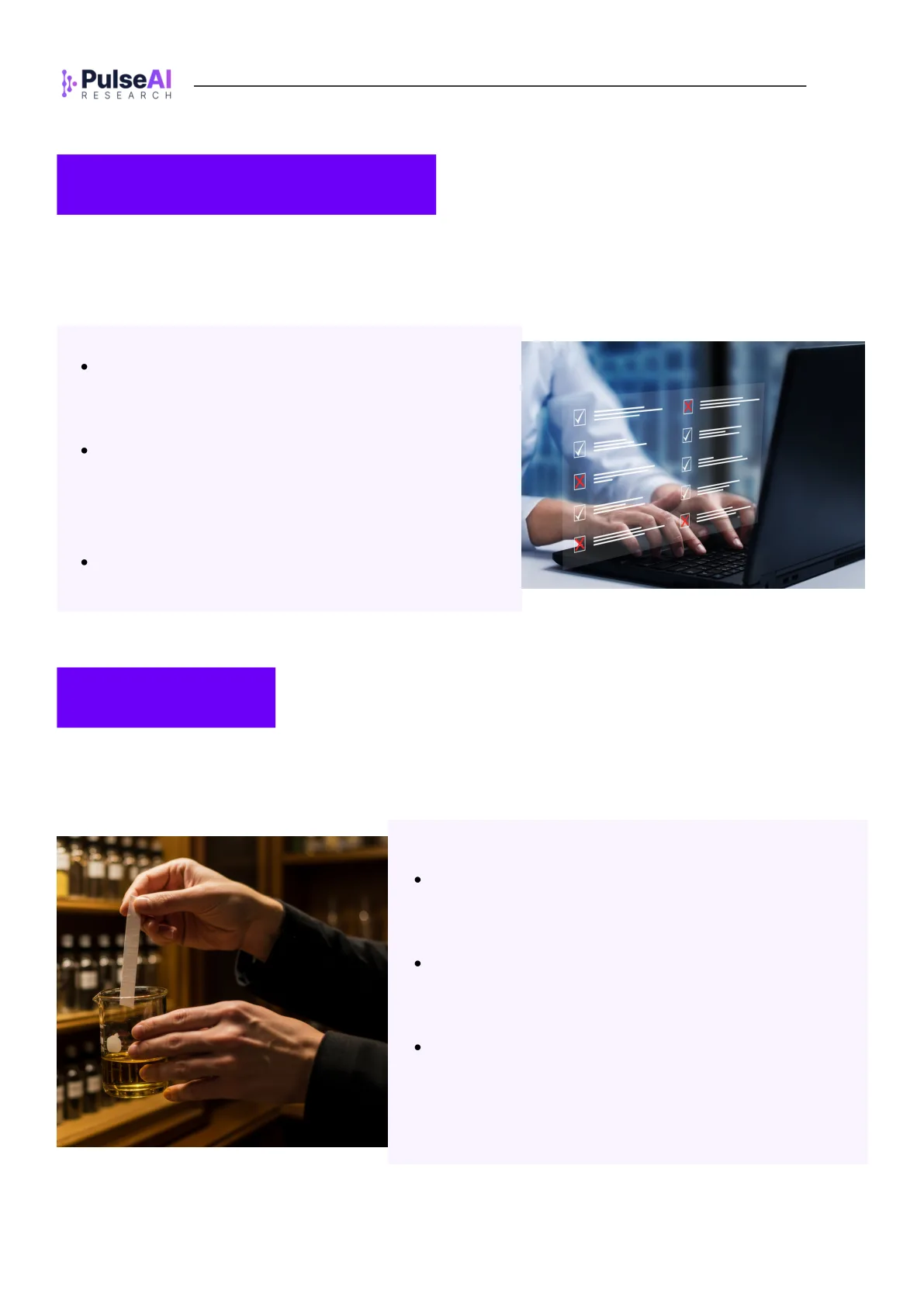
The study used a quantitative online survey, targeting 1,000 urban and semi-urban Indian consumers aged 18-45. Key elements include:
- Survey Type: Structured questionnaire with closed-ended and Likert scale questions.
- Sample: 1,000 respondents, balanced across demographics and regions (Tier 1, 2, and 3 cities).
- Duration: 72-Hour data collection period.

2.3 Scope
The research covers India’s fragrance market in transition, focusing on:
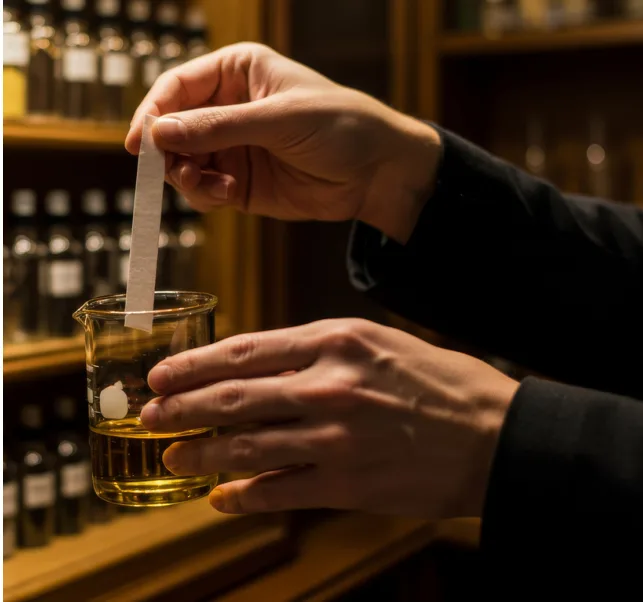
- Categories: Perfumes (EDPs), deodorants, body mists, and scented oils.
- Key Drivers: Longevity, price sensitivity, trial-first discovery, and brand trust.
- Consumer Segments: Personas reflecting the shift from deodorant dependence to perfume preference.
3.3 Challenges and Opportunities
Challenges
Deodorant Decline: Deodorants are losing relevance as consumers upgrade to affordable perfumes. Their traditional role in the value segment is being eroded.
Price Sensitivity: With 75% capped under ₹1,000, mass consumers remain cautious spenders.
Opportunities
Affordable EDPs: The sweet spot lies in perfumes priced ₹500–₹1,000 that deliver premium-like performance.
Trial & Discovery: Brands that scale miniature EDPs and sampler formats can win early adoption and build loyalty.

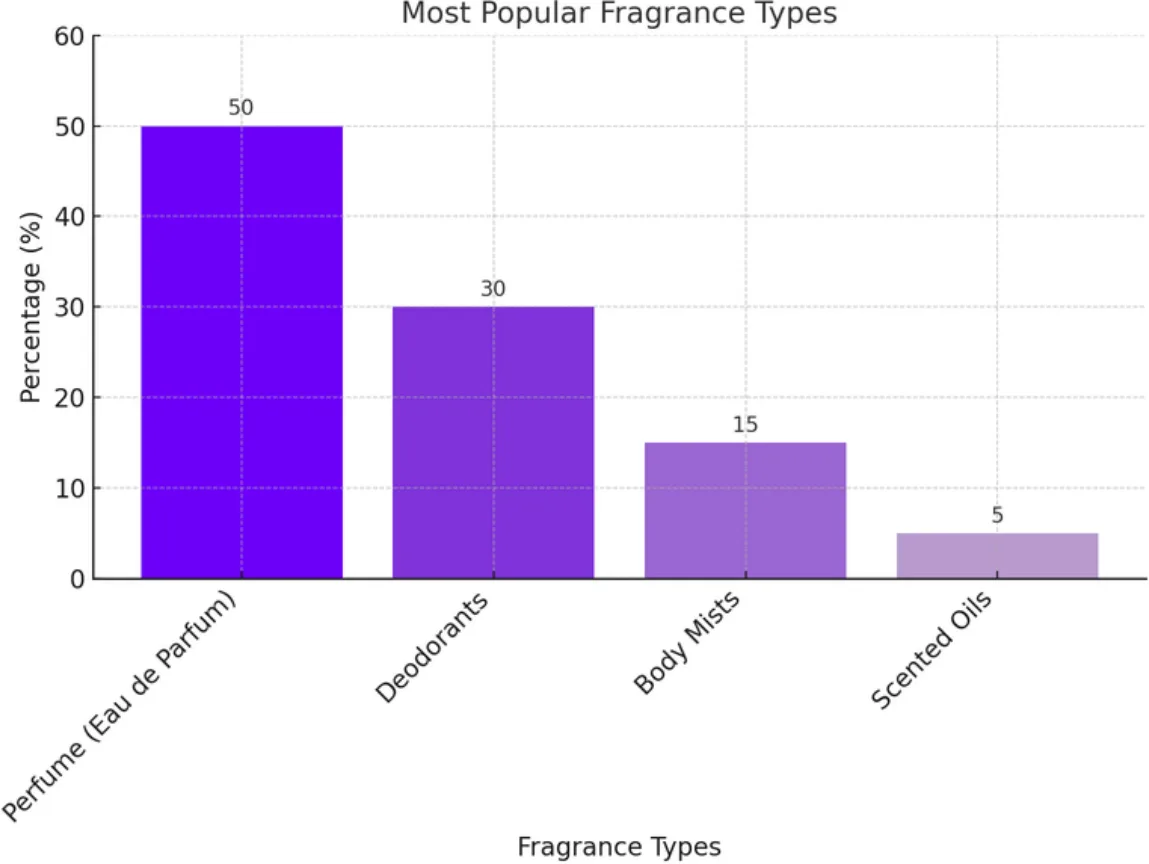
5.1 Scented Choices: What Consumers Love
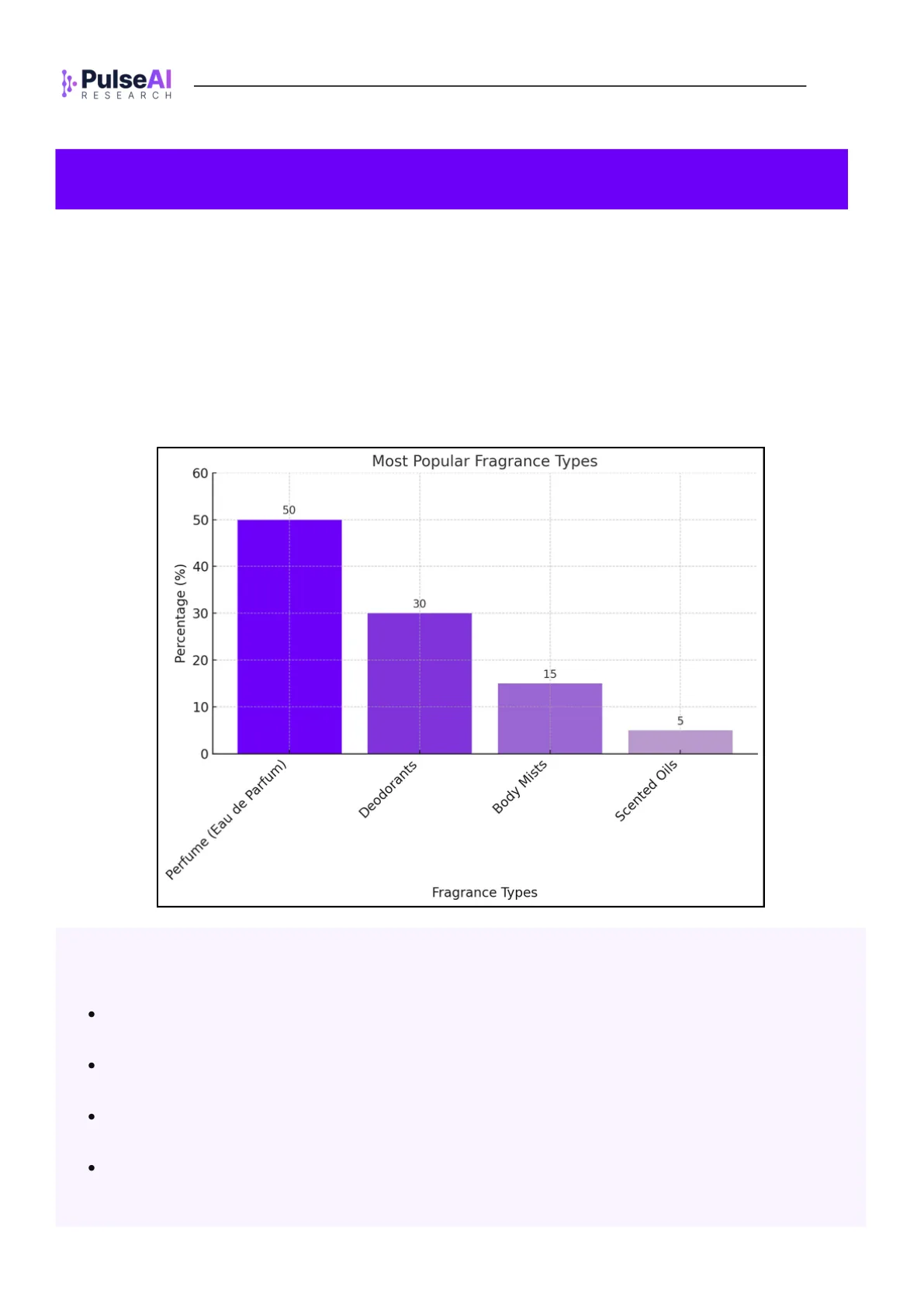
5.1.1 Top Fragrances Consumers are Reaching For
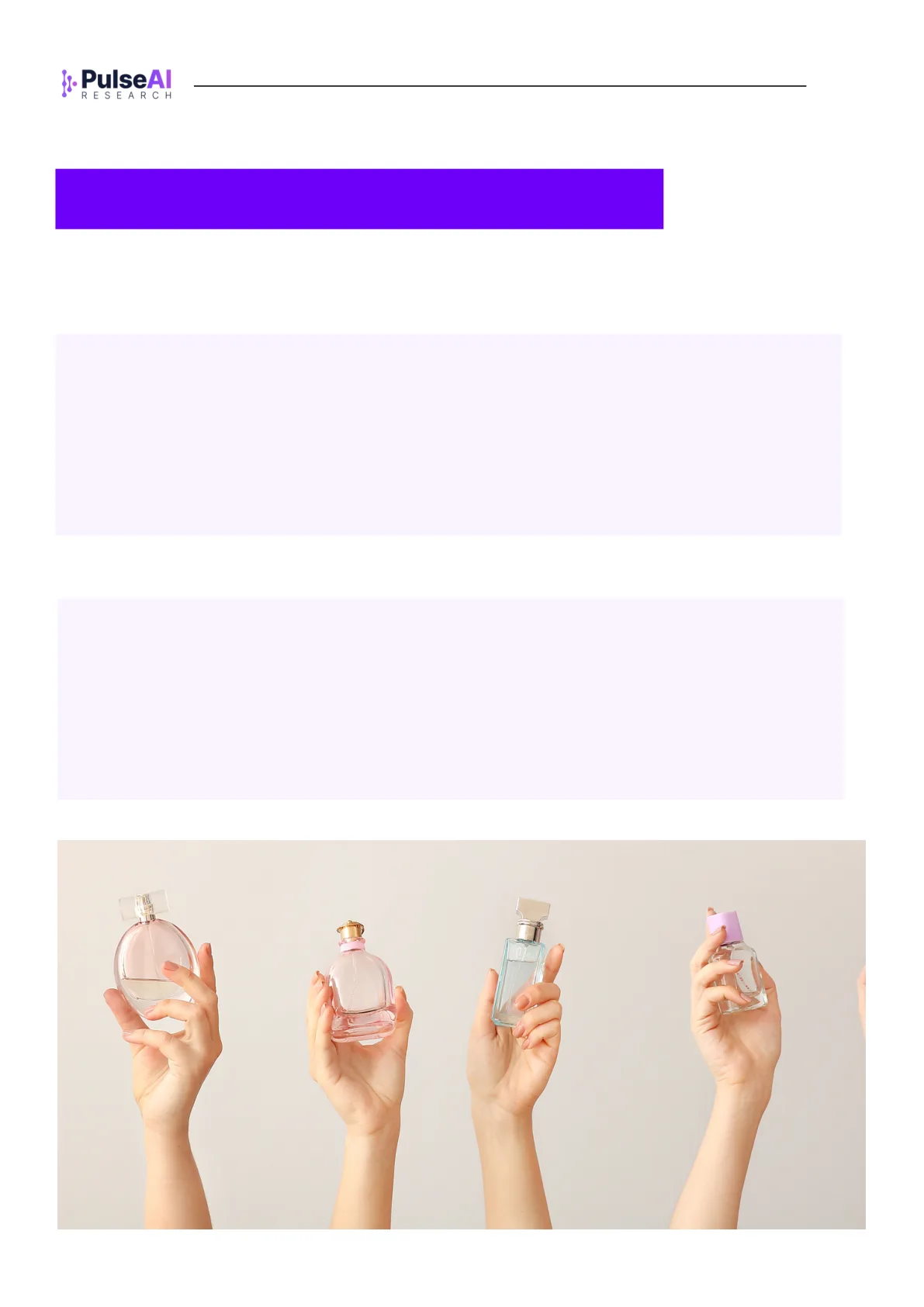
Perfumes (Eau de Parfums) have overtaken deodorants as the most preferred fragrance type, marking a structural change in the category. While deodorants once defined everyday usage, consumers are clearly migrating toward EDPs for long-lasting performance. Deodorants, still present in the mix, are increasingly being sidelined as buyers seek value and endurance in their daily wear.
Strategic Implications for Brands:
- Reposition perfumes as the default daily fragrance, not an occasional luxury.
- Invest in affordable EDP lines to capture consumers shifting away from deodorants.
- Scale miniature EDP formats to reinforce trial-first adoption.
- Accept that deodorant growth will flatten; future volume lies in perfumes.
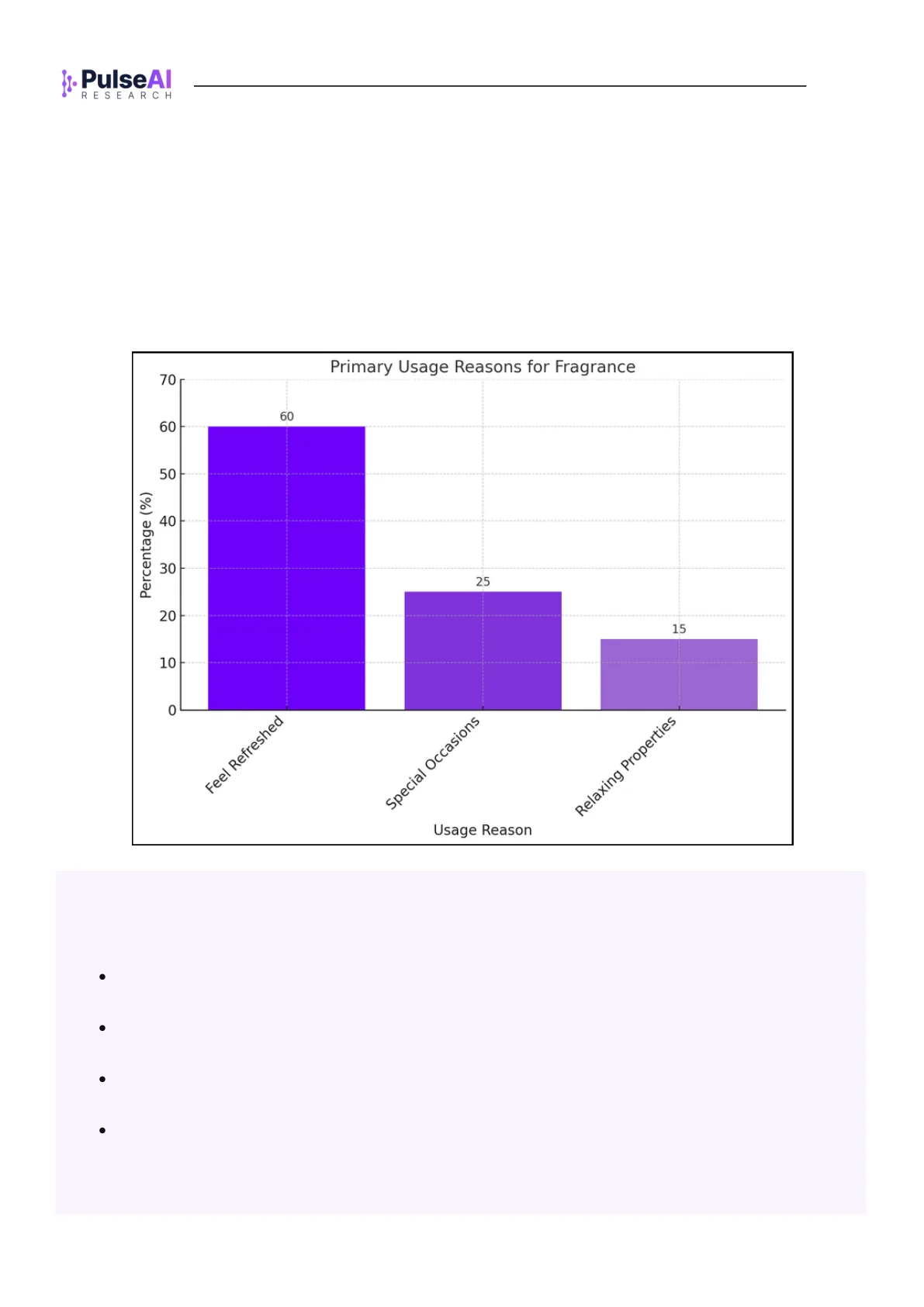
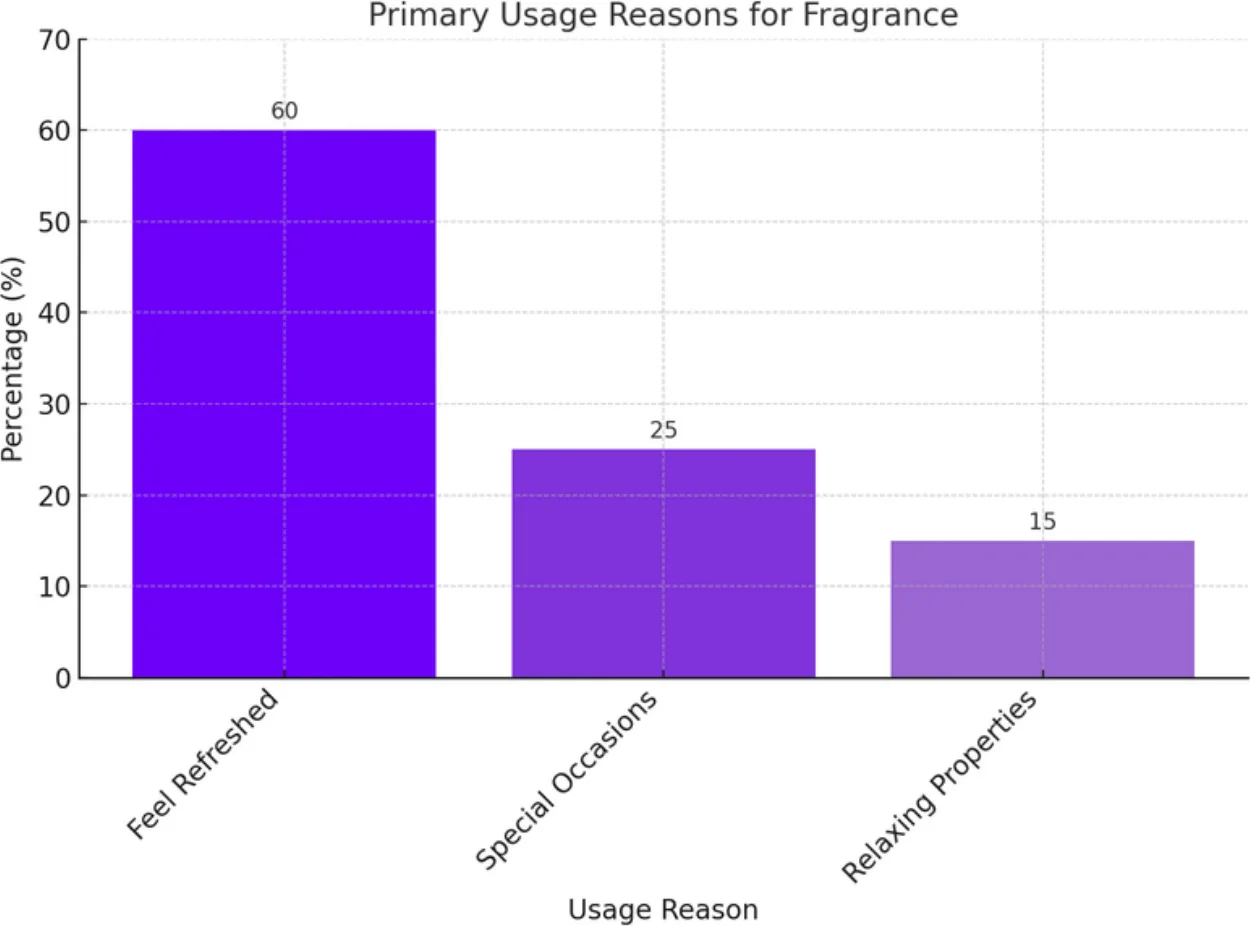
5.1.2 Why Consumers Wear Fragrance
Fragrance use in India is no longer only about freshness. Consumers primarily use scents to feel confident and carry lasting impact throughout the day. Deodorants, built around instant freshness, fall short in delivering this benefit, while perfumes now occupy the central role in daily grooming rituals.
Strategic Implications for Brands:
- Frame perfumes as confidence essentials, not just occasion-based indulgences.
- Communicate the long-wear emotional payoff (confidence, self-expression).
- Shift messaging from hygiene-led deo cues to performance-led perfume cues.
- Build daily-use EDP campaigns that replace deo’s old narrative of “everyday freshness.”
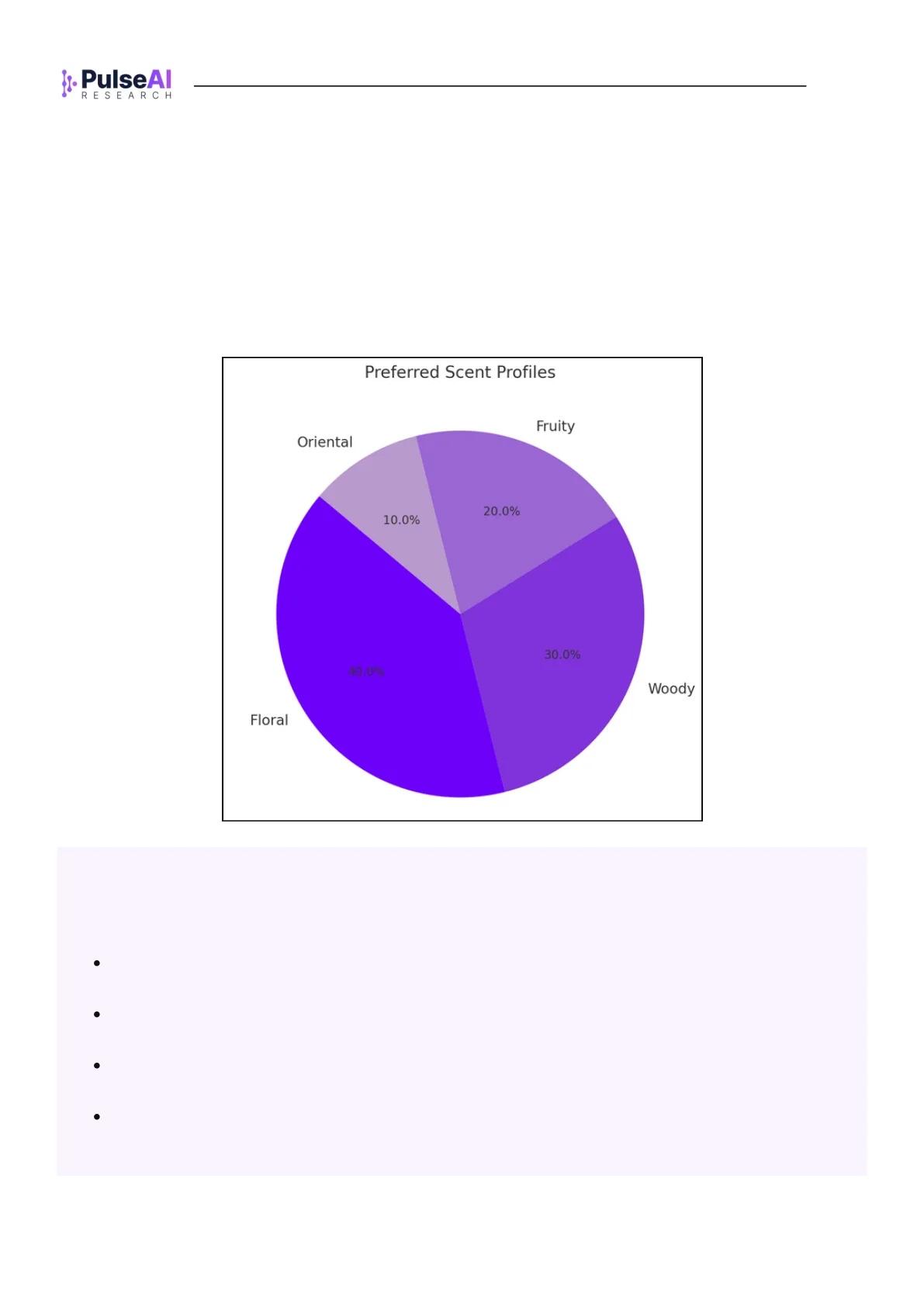
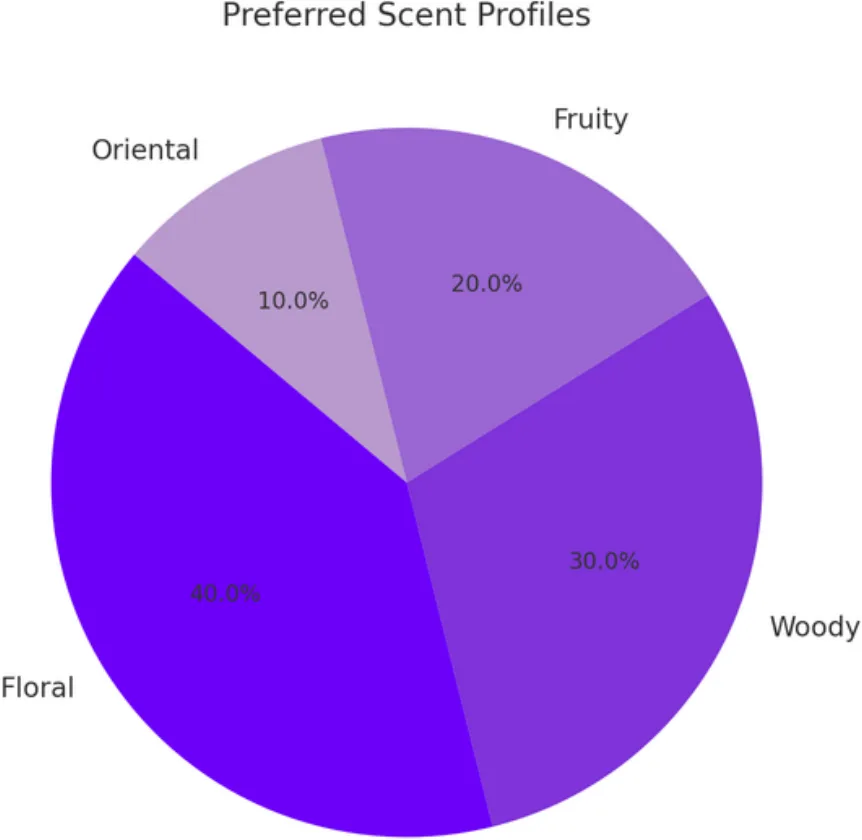
5.1.3 The Scents That Sell
Floral and woody fragrances remain the most sought-after, but the shift lies in format, not scent profile. Consumers still love familiar, classic scents — but they increasingly want them in perfume form rather than deodorant sprays. Fruity and oriental notes are growing as niche add-ons, but longevity-first perfumes dominate usage occasions.
Strategic Implications for Brands:
- Deliver classic scent profiles in affordable EDPs.
- Use deodorant-style freshness cues but anchor them in perfume formats.
- Innovate hybrids (e.g., deo + perfume crossover) only if longevity is guaranteed.
- Tie exclusivity to EDPs, not deodorants, as the “aspirational yet affordable” space.
5.1.4 What Drives Fragrance Decisions
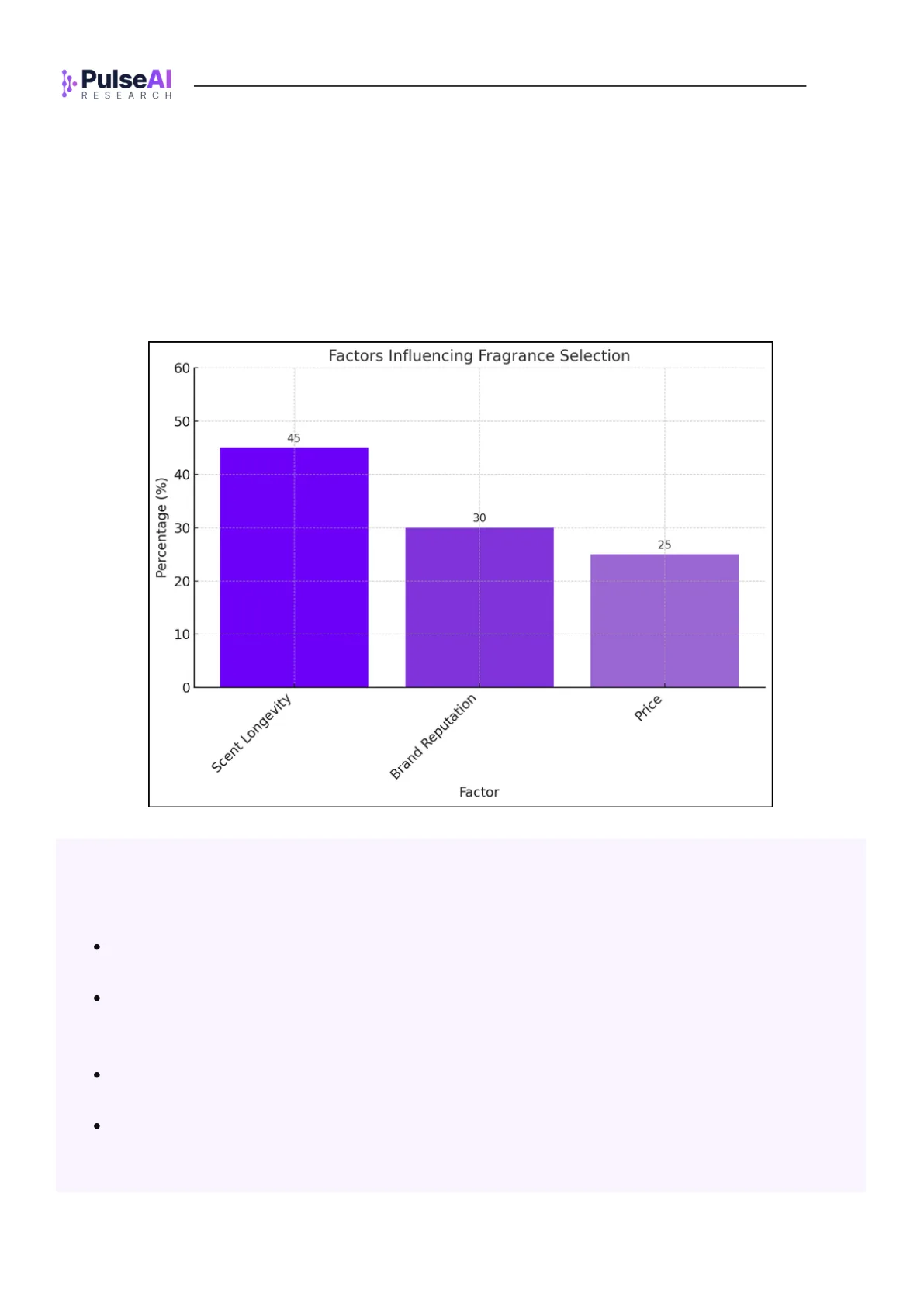
Longevity is the number one purchase driver for Indian fragrance buyers, ahead of brand reputation and price. This single insight explains deodorant’s decline: consumers no longer accept short-lived freshness when affordable perfumes deliver all-day performance. Price and trust still matter, but endurance defines choice.
Strategic Implications for Brands:
- Make longevity the hero claim across perfume packaging and campaigns.
- De-prioritise deo-led promises of “freshness hours”; focus on EDPs with lasting wear.
- Build trust through transparent sourcing, but link it back to performance value.
- Introduce tiered perfumes under ₹1,000 to make endurance accessible.
5.2 How Consumers Shop for Fragrances
5.2.1 Where Consumers Buy Their Scents
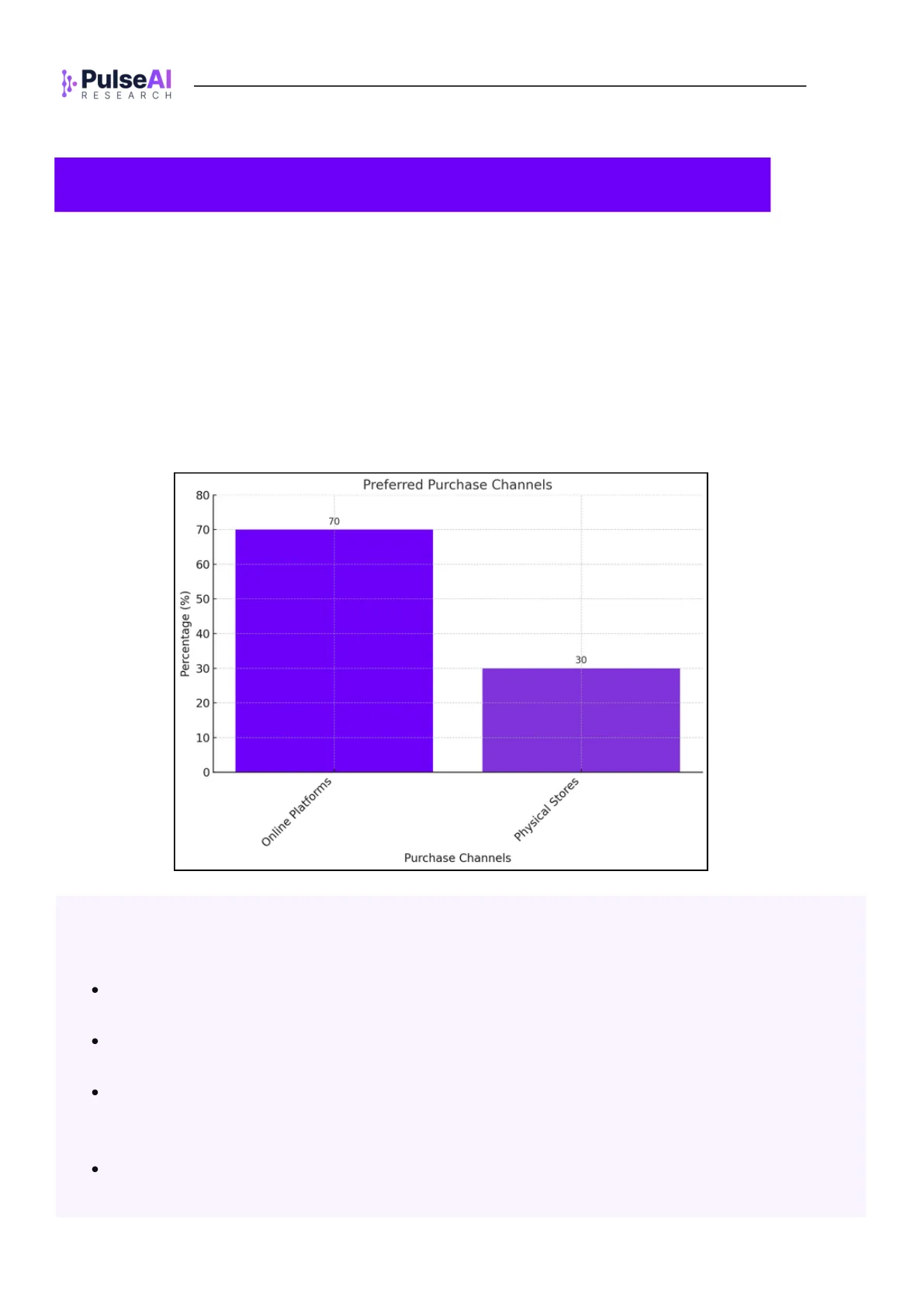
Online platforms dominate fragrance purchases, with 70% of buyers preferring e-commerce for convenience, variety, and value. This shift is accelerating the rise of affordable perfumes, which are now widely accessible across digital marketplaces. Physical retail, while still relevant, plays a secondary role — particularly for deodorants, whose mass in-store dominance is being overshadowed by EDP discovery online.
Strategic Implications for Brands:
- Strengthen e-commerce presence for perfumes, especially affordable EDP SKUs.
- Use online visibility to position perfumes as the new mainstream, not deos.
- Build omnichannel experiences, but make perfumes the hero product across touchpoints.
- Ensure offline sampling focuses on perfume trial packs, not deodorant testers.
5.2.2 How Consumers Discover New Fragrances
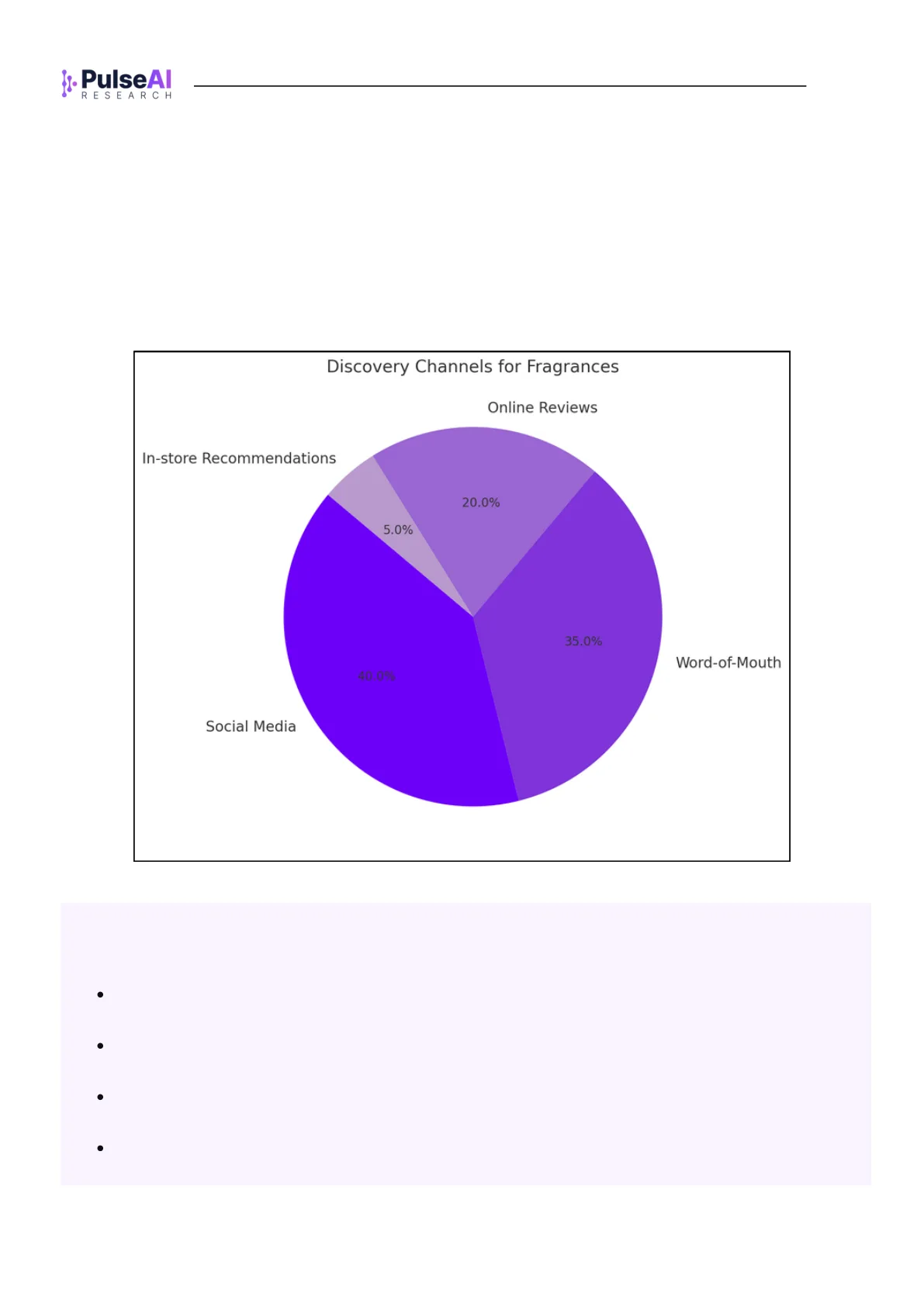
Discovery is now peer- and social-led, with 40% relying on social media and 35% on word-of-mouth. This trend strongly benefits perfumes, as influencer endorsements and peer trials often spotlight EDPs with long-lasting performance. In-store discovery, once the strength of deodorant displays, is fading into insignificance.
Strategic Implications for Brands:
- Build social-first campaigns around perfumes, not deos.
- Encourage peer-led trial sharing through mini EDP gifting and referral packs.
- Prioritise influencer collaborations that validate longevity claims.
- Phase out deo-led discovery campaigns; focus messaging on affordable perfumes.
5.2.3 The Power of Sampling: Try Before You Buy
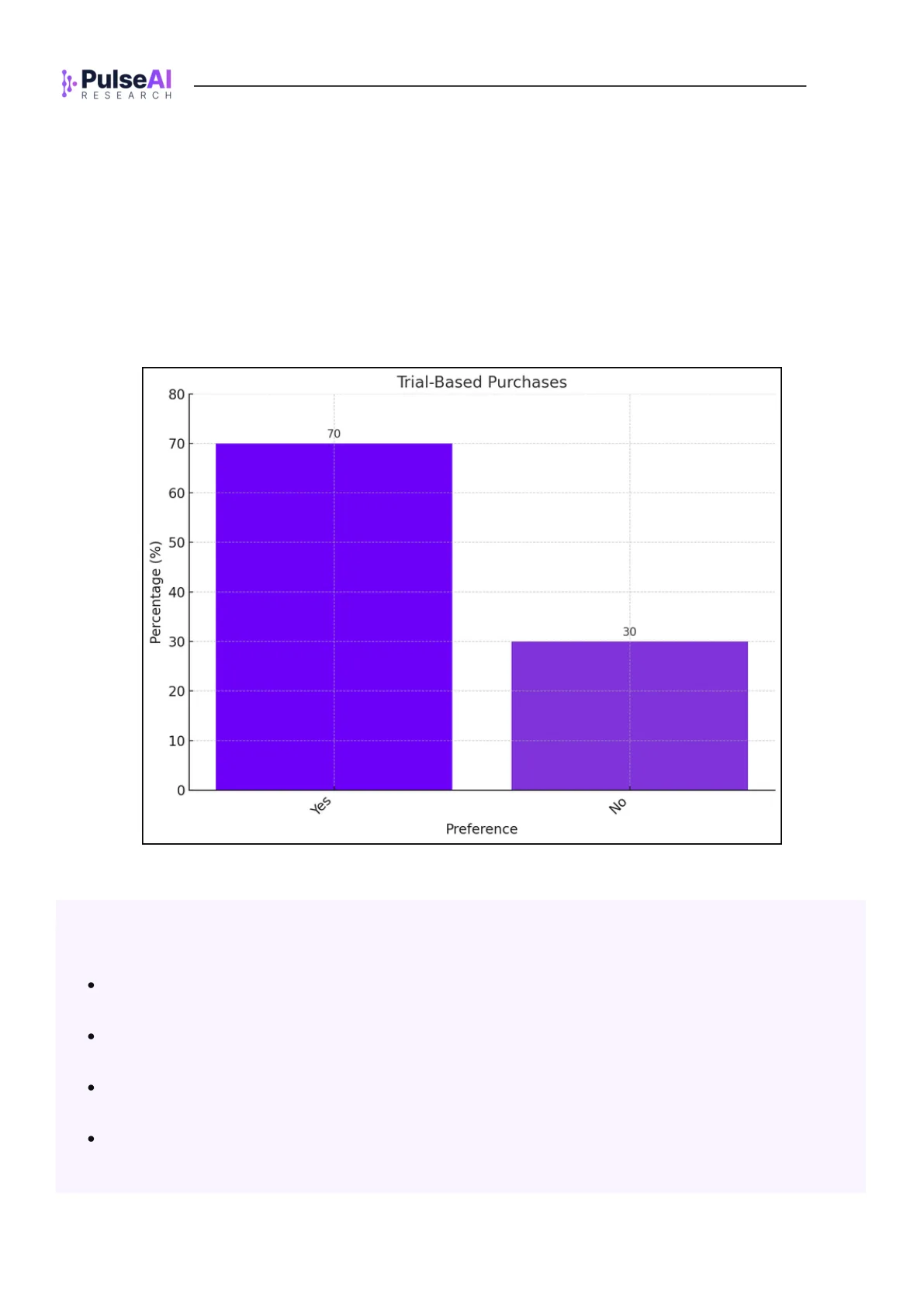
70% of consumers prefer trial-based purchases before committing to full-size bottles. Historically, deodorants acted as this low-risk trial entry point. Today, it’s EDP miniatures and sampler packs that fulfil this role — capturing trial-first behaviour and shifting the discovery funnel decisively toward perfumes.
Strategic Implications for Brands:
- Scale miniature EDP formats as the new trial engine.
- Bundle perfumes into affordable trial kits to replace deo-led sampling.
- Build subscription or discovery models around perfume minis.
- Use trial-first pathways to accelerate migration from deodorant to perfume
5.3 What Consumers Think About Fragrance Brands
5.3.1 The Brand Qualities Consumers Value Most
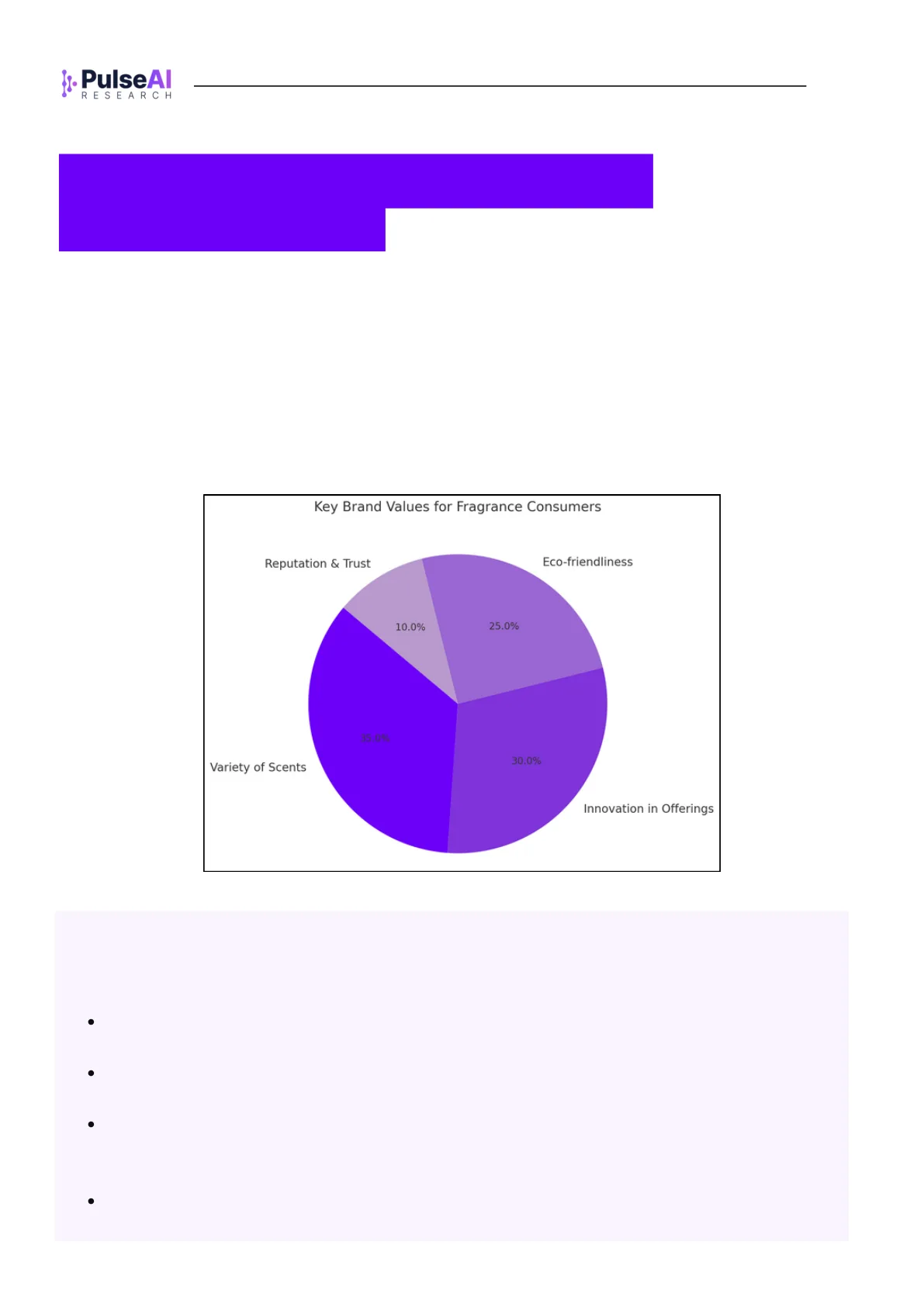
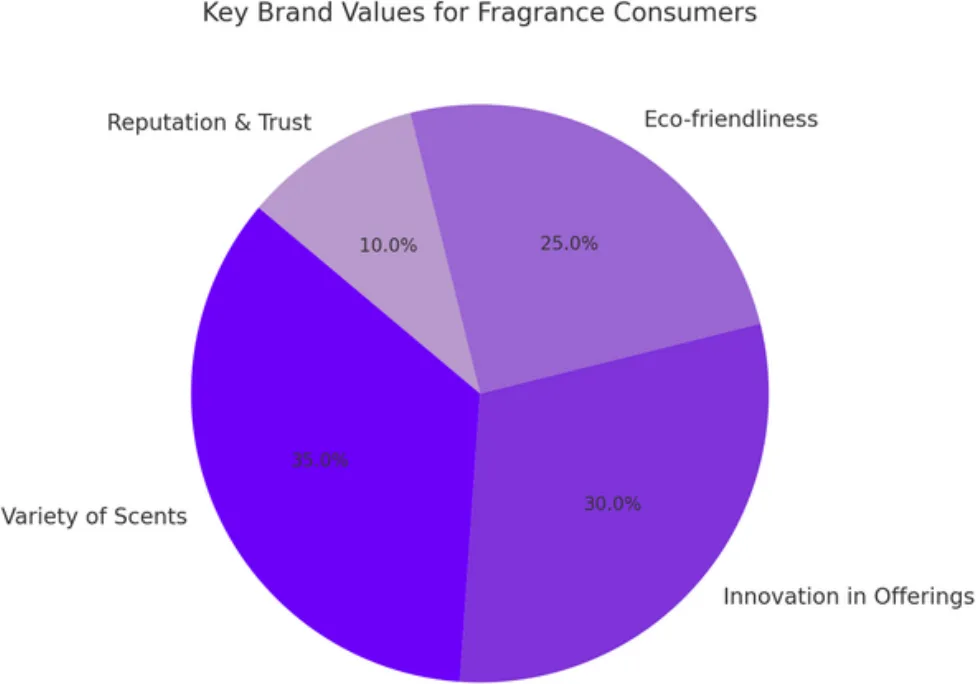
Consumers value variety of scents (35%), innovation (30%), and eco-friendliness (25%). But in the context of the deodorant-to-EDP shift, these qualities are being sought within perfumes, not deodorants. Variety and freshness once defined deo aisles — now consumers expect the same breadth and innovation in affordable EDPs that deliver longevity.
Strategic Implications for Brands:
- Broaden perfume portfolios instead of stretching deo lines.
- Anchor innovation in EDP formats with new scent combinations.
- Embed eco-friendly practices in perfume packaging, reinforcing value + responsibility.
- Position deodorants as secondary add-ons, not the brand’s core offering.
5.3.2 The Demand for Custom Perfume Experiences
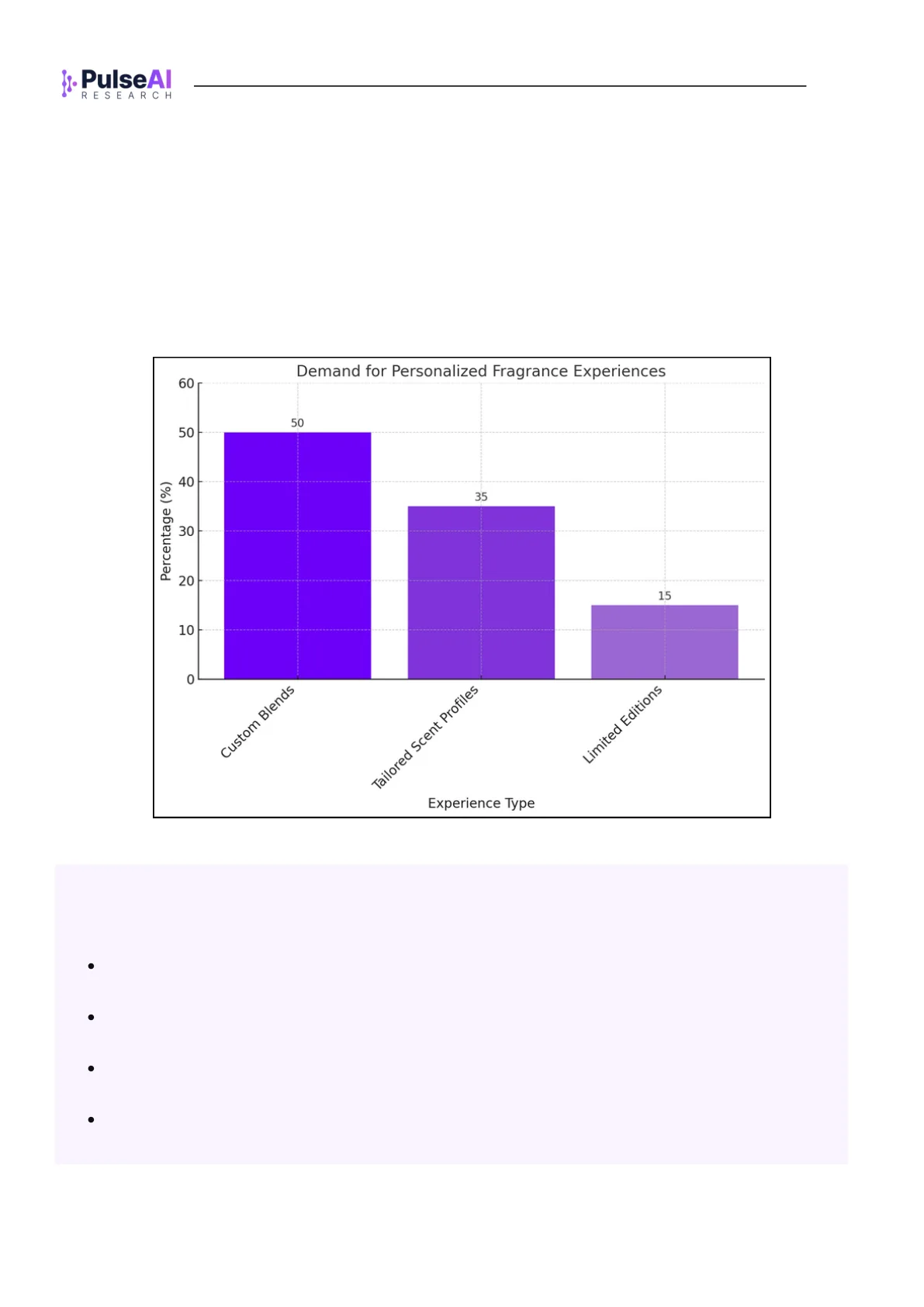
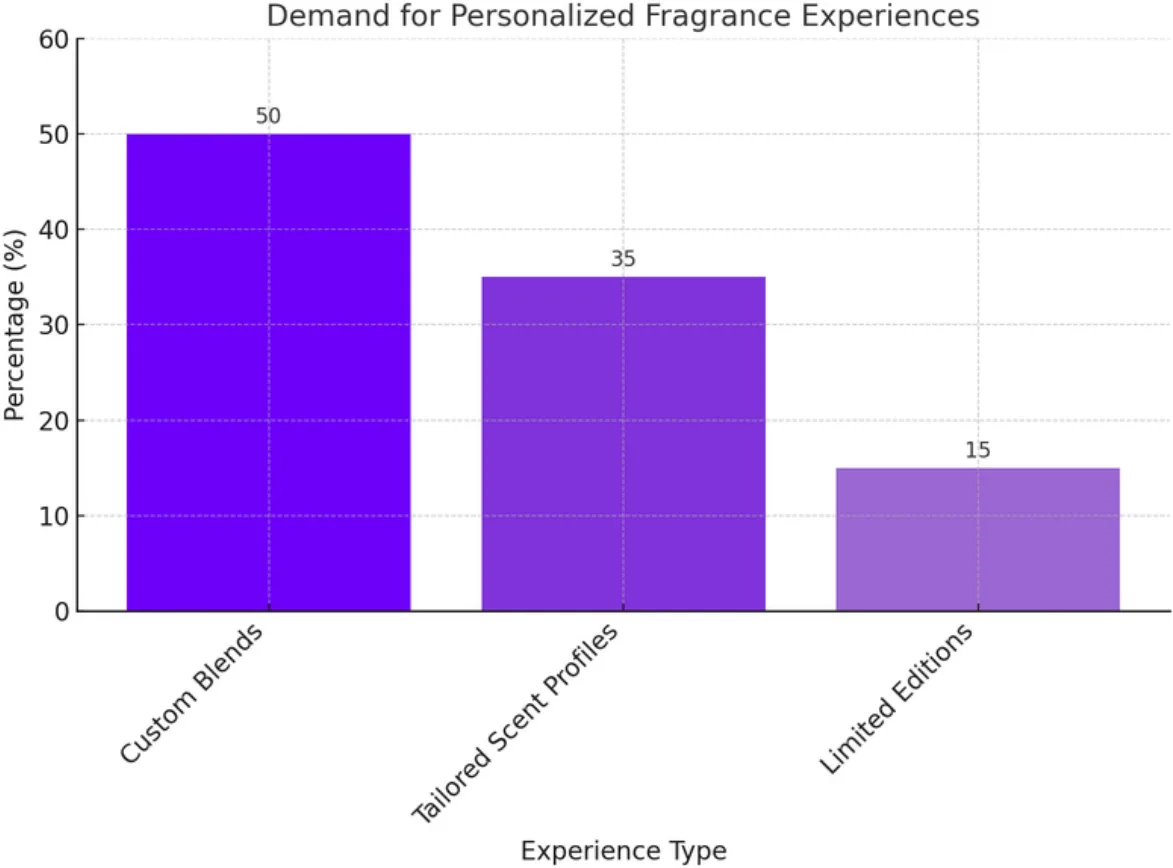
Half of consumers show interest in custom blends and tailored scent profiles. Personalisation demand is gravitating towards perfumes, where longevity and variety allow for richer experiences. Deodorants, limited by format and performance, are no longer viewed as the space for individuality — customisation belongs to EDPs.
Strategic Implications for Brands:
- Launch affordable customised EDP services (e.g., scent quizzes, DIY kits).
- Make personalisation a perfume-only proposition, not stretched to deos.
- Use limited-edition EDPs to create exclusivity and collectability.
- Tie personalisation back to long-lasting value, not short-lived deo refresh.
5.4 What’s Next for Fragrance: Consumer Trends Ahead
5.4.1 The Price Tag That Fits
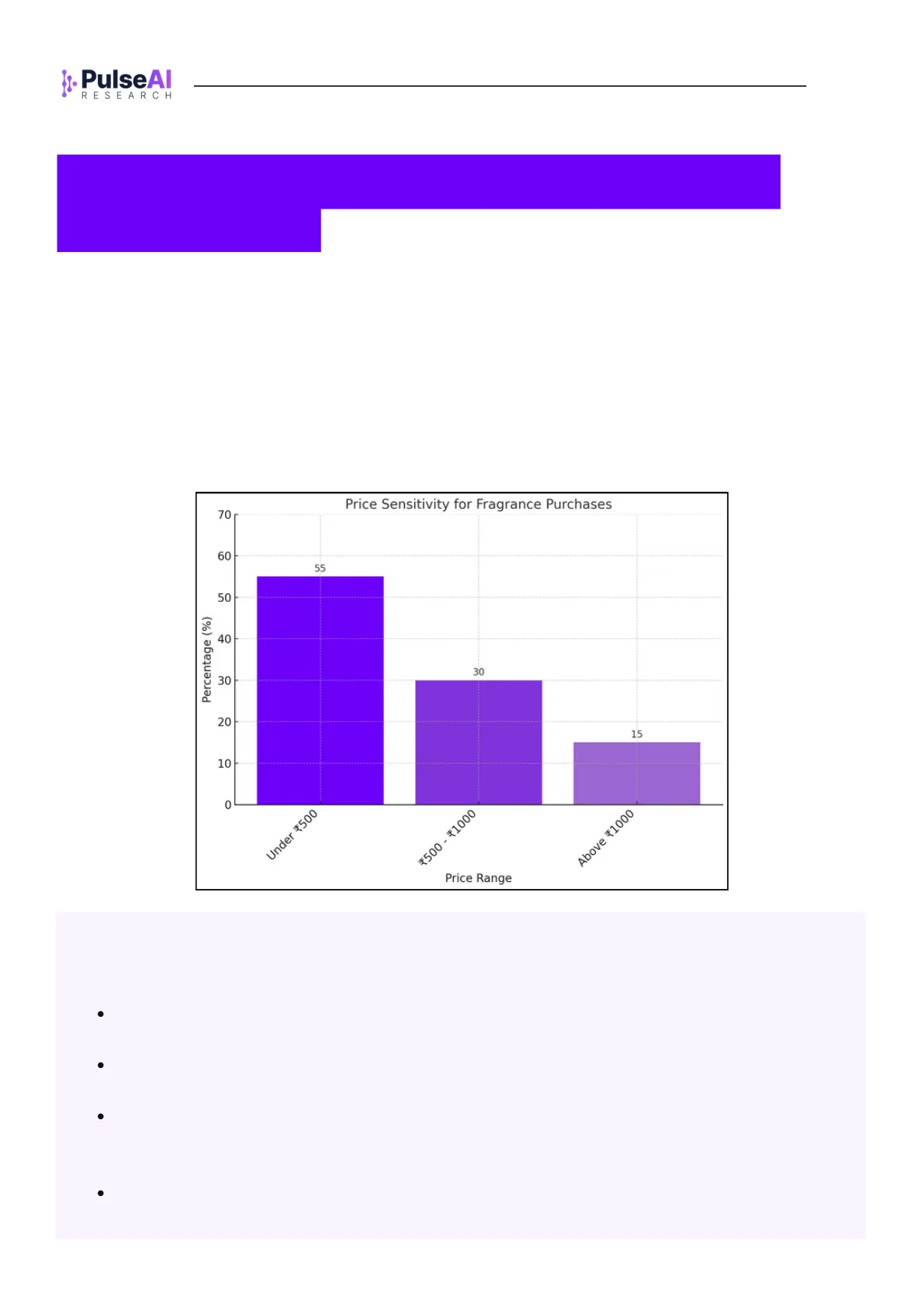
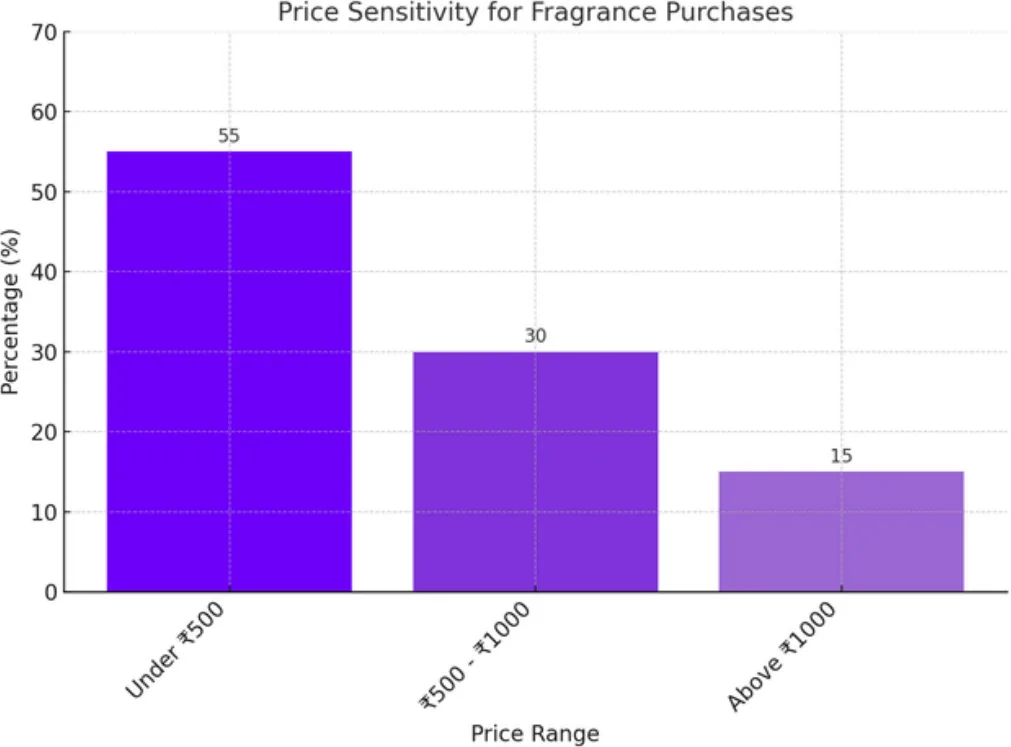
55% of consumers prefer fragrances priced under ₹500, 30% are comfortable between ₹500–₹1,000, and only 15% go above ₹1,000. This entrenched price sensitivity shows why deodorants can no longer anchor the value segment. Consumers now expect perfume-level performance within these price brackets, shifting their spend away from deos to affordable EDPs.
Strategic Implications for Brands:
- Position ₹500–₹1,000 perfumes as the new “mass market” core.
- Offer tiered EDP lines (minis, mid-size, full-size) to capture every budget step.
- Retire deo-led “value” messaging; instead, push perfumes as better value-for-money.
- Use pricing experiments to optimise the sweet spot for affordable EDPs.
5.4.2 How Sustainability is Shaping Purchases
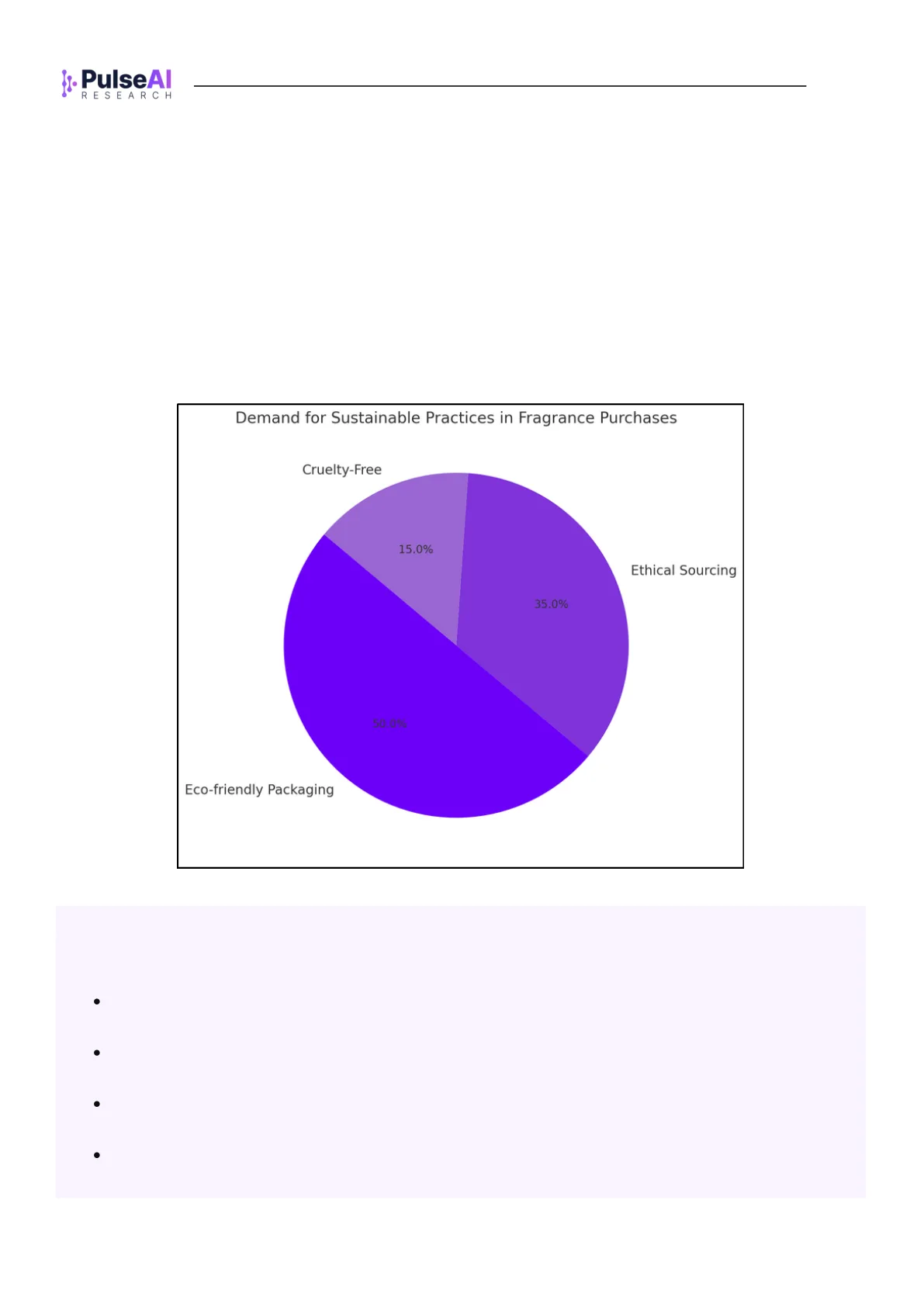
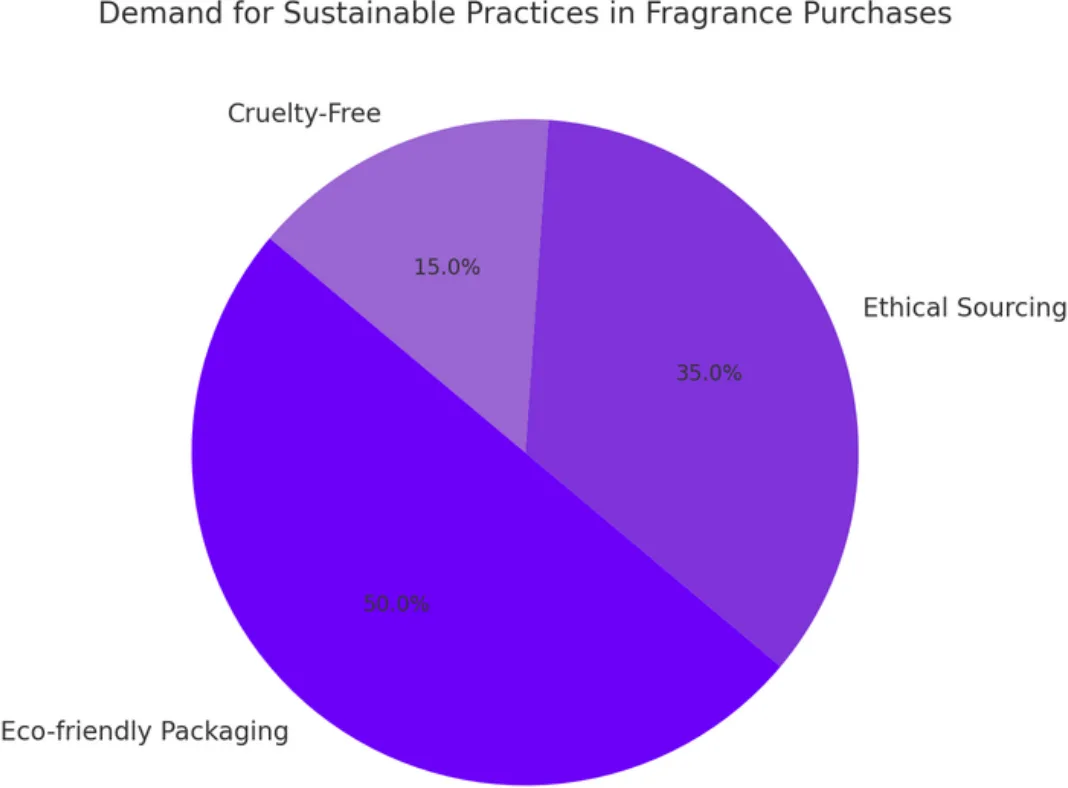
Half of consumers prioritise eco-friendly packaging, while 35% care about ethical sourcing and 15% about cruelty-free certification. These sustainability demands are increasingly tied to perfumes, where packaging, refill formats, and ingredient transparency matter more. Deodorants, reliant on aerosols and disposability, are losing cultural relevance in a world where buyers want products that are long-lasting for them and sustainable for the planet.
Strategic Implications for Brands:
- Lead sustainability narratives with perfume innovation, not deodorant claims.
- Invest in refillable or recyclable EDP packaging in the ₹500–₹1,000 range.
- Tie eco-friendly cues to the “lasting value” promise of perfumes.
- Make sustainability an add-on advantage that strengthens affordable EDP appeal.
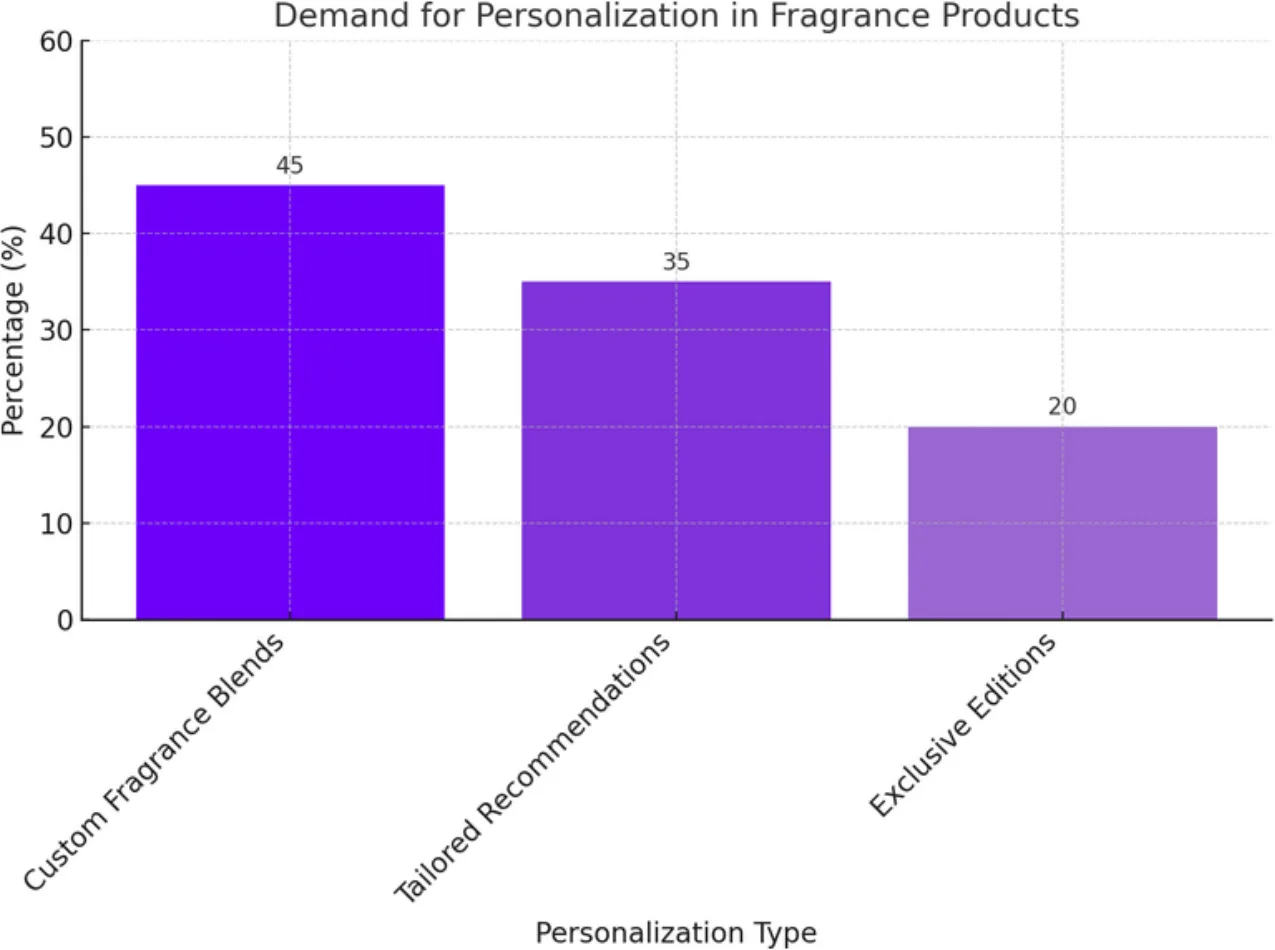
5.4.3 Consumers Want More Customization
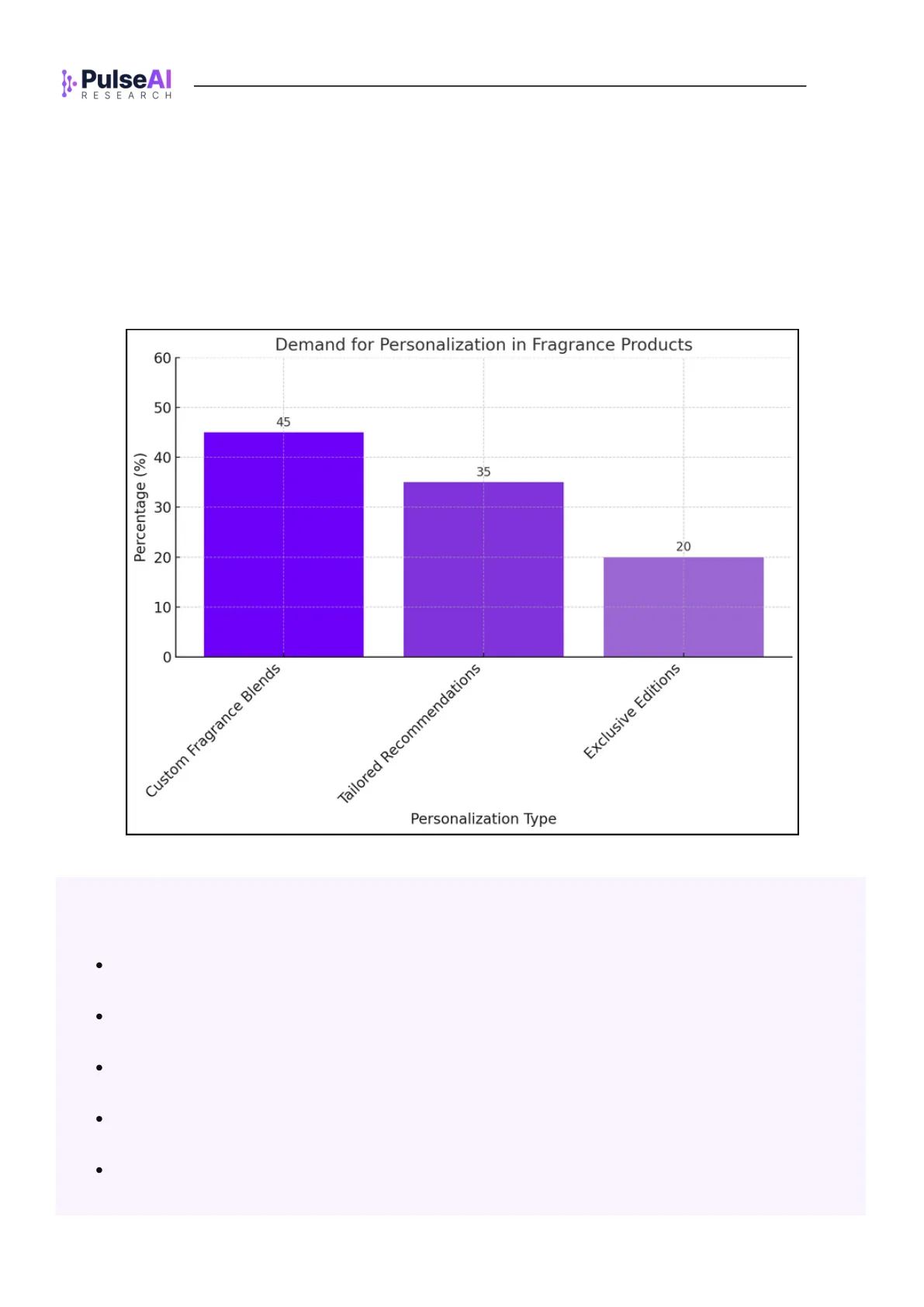
There’s a strong demand for personalized fragrance experiences, with 45% of consumers interested in custom blends, 35% in tailored scent profiles, and 20% in exclusive editions. Consumers are looking for unique, individualized fragrance options.
Strategic Implications for Brands:
- Offer customizable fragrance options to allow for personalized experiences.
- Use digital tools for personalized scent recommendations.
- Introduce limited-edition fragrances to appeal to consumers seeking exclusivity.
- Foster deeper consumer engagement through customization services.
- Leverage personalization in loyalty programs to build long-term relationships.

The structural decline of deodorants means the future of growth lies in affordable EDPs. Brands must stop defending deo volumes and instead invest in perfumes that deliver premium-like performance at mass price points.
- Shift the Value Anchor: Move the ₹500–₹1,000 price band from deodorants to perfume SKUs. Position these as everyday essentials, not occasional indulgences.
- Make Longevity the Hero: Build claims, packaging, and communication around long-lasting performance — the #1 consumer driver.
- Scale Miniatures & Trial Packs: Replace deo-led sampling with EDP minis, discovery kits, and subscription models to own the trial-first funnel.
- Reinvent Brand Portfolios: Reframe deodorants as secondary or entry products, with perfumes taking centre stage as the core brand narrative.
- Balance Performance + Responsibility: Integrate eco-friendly packaging and ethical sourcing into perfumes, reinforcing both endurance and sustainability.

Retailers must pivot their playbook from deo-heavy aisles to perfume-led discovery and trial. As consumers migrate to affordable EDPs, physical and digital retail must align around performance-first perfumes.
- Redesign Shelf Priorities: Give perfumes primary shelf space in-store, relegating deodorants to supporting roles.
- Make Trial Easy: Offer mini EDP testers, discovery boxes, and on-the-spot perfume sampling to replace deo sprays as trial tools.
- Curate Value Bundles: Bundle perfumes in the ₹500–₹1,000 sweet spot, promoting them as the better-value upgrade from deodorants.
- Integrate Online & Offline Journeys: Use omnichannel strategies where consumers can trial EDPs in-store and purchase refills or variations online.
- Loyalty Through Perfumes: Build rewards programmes around perfume replenishment moving customers away from one-time deo buys to repeat perfume usage.
7.1 Growth Potential
India’s fragrance market will continue to expand, but growth will be driven by affordable Eau de Parfums (EDPs), not deodorants. As longevity becomes the decisive purchase driver, perfumes priced in the ₹500–₹1,000 sweet spot will capture the bulk of demand. Deodorants, once the growth engine, will steadily decline into a secondary, hygiene-led subcategory.
7.2 Consumer Sentiment Shifts
Consumer sentiment is converging around two clear expectations: long-lasting performance and affordable value. Sustainability and personalisation matter, but only after the baseline of endurance is met. This shift leaves deodorants outside the core narrative, while perfumes emerge as both the practical and aspirational choice.


7.3 Competitive Landscape
Competition will intensify as mass brands and niche players alike chase the affordable EDP opportunity. Large deo-heavy portfolios will need restructuring, as players that fail to pivot risk losing market share. Direct-to-consumer perfume brands, with agility in mini formats and digital-first distribution, will set the pace of disruption.
7.4 Long-Term Projections
Over the next 5–10 years, the category will be defined by EDPs as the everyday fragrance. Deodorants will not disappear but will shrink into a marginal, low-value hygiene segment. Affordable perfumes will dominate discovery, loyalty, and replenishment, while sustainability and refills become mainstream expectations. The future is clear: India’s fragrance market will not be led by deodorants. It will be built on accessible, performance-oriented perfumes that deliver confidence, longevity, and value — the new backbone of everyday fragrance consumption.
Explore more consumer insights or turn your business question into research.