


One Country. Two OTT Universes
A new comparative study across North and South India reveals that fame, subscriptions, and star power operate on fundamentally different logics with direct implications for content strategy, talent investment, and platform positioning.
India's streaming platforms share the same infrastructure. The same apps. Often the same content catalogue. But the audience behaviour running on top of that infrastructure tells two entirely different stories and most brands and platforms are still operating as if it's one.
PulseAI Research's latest report tracked fame, subscription intent, star power, and platform usage across North and South India. What emerged wasn't just a regional difference it was a structural divergence in how OTT influence is built, distributed, and converted.
Recognition Is Not the Same as Influence
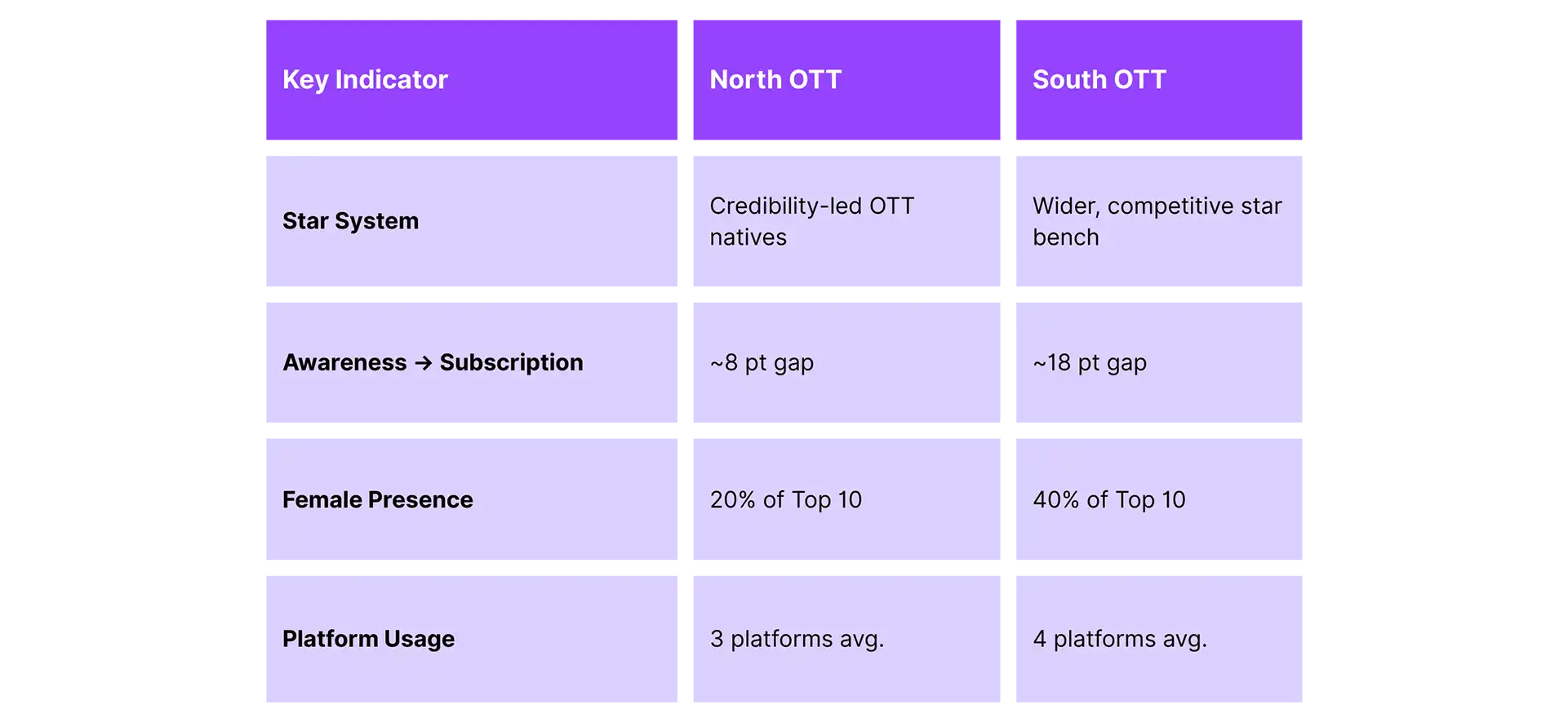
The most telling metric in the study is the gap between how well-known an actor is and whether audiences will actually subscribe to watch them. In North India, that gap sits at approximately 8 percentage points tight enough to suggest that fame and subscription pull move together. Audiences reward performance credibility and storytelling trust. The stars who dominate OTT here are largely platform-native, built on the back of streaming-first projects.
In South India, the same gap widens to ~18 percentage points. Several of the country's most recognised actors carry significant awareness scores that simply don't convert into subscription intent. For content strategists, the implication is direct: casting decisions driven by fame metrics alone will consistently misread the South Indian market.
 The South Has Already Rewritten the Gender Equation
Four of the top 10 stars driving OTT engagement in South India are women — a 40% share. In the North, that number is 2. This isn't an outlier. Actors like Samantha Ruth Prabhu, Nayanthara, Sai Pallavi, and Keerthy Suresh aren't on the periphery of South OTT influence — they're central to how it's structured. For researchers tracking content investment patterns, this signals a durable structural shift, not a content cycle.
The platform landscape compounds the divergence. South audiences use an average of 4.1 OTT platforms versus 3.3 in the North. Regional players like Sun NXT and Aha have expanded the ecosystem well beyond global platforms — creating a more fragmented, competitive environment where no single star or service commands consolidated reach.
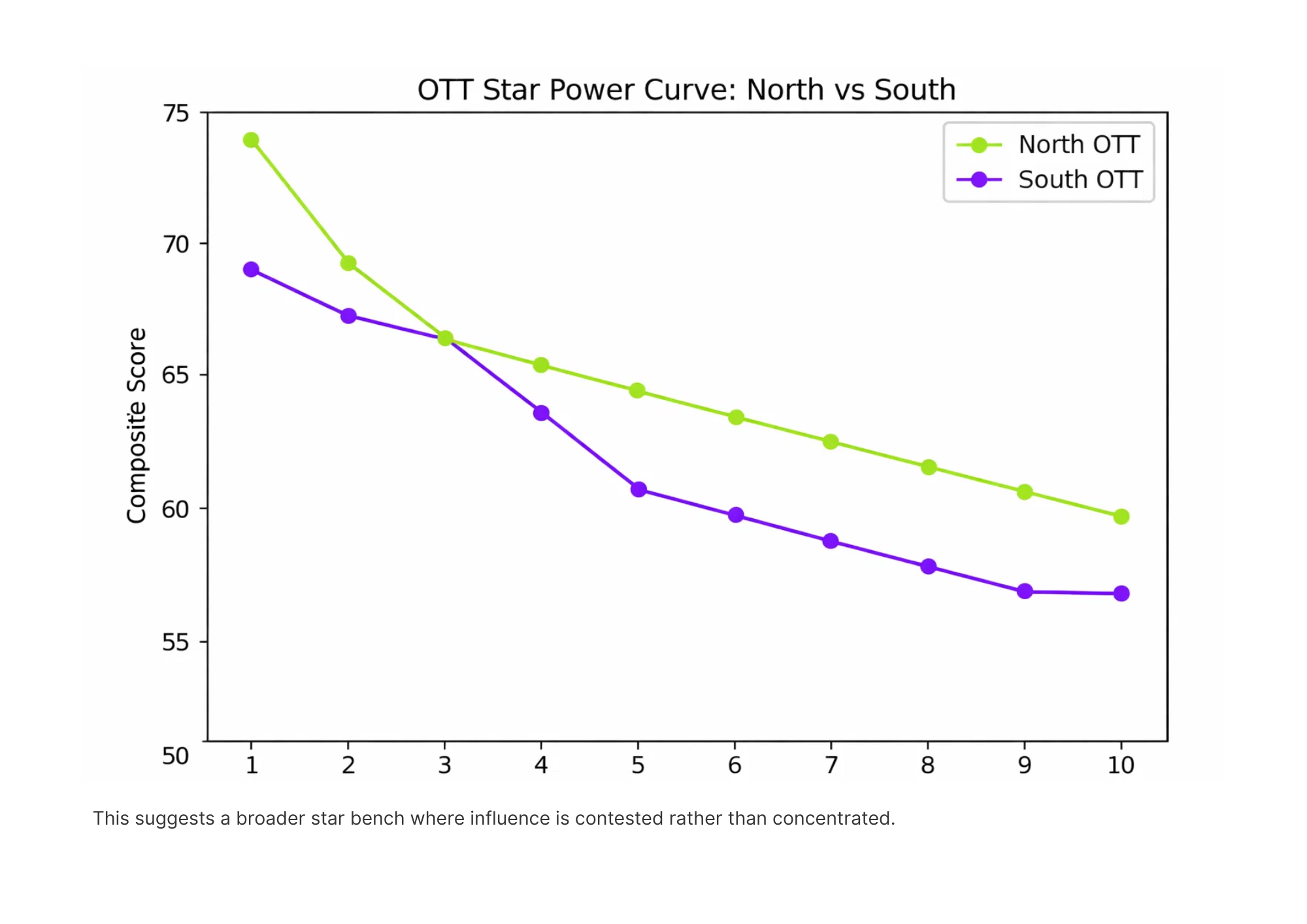
 The star power curve makes the structural difference visible. In the North, influence drops steeply after the top few — a concentrated market with identifiable leaders. In the South, the curve is flatter and more contested. No single actor, language group, or platform has a lock on OTT attention.
For marketers building talent strategies and researchers tracking streaming behaviour, the takeaway is consistent across every data point: a national OTT lens will systematically misread both markets.
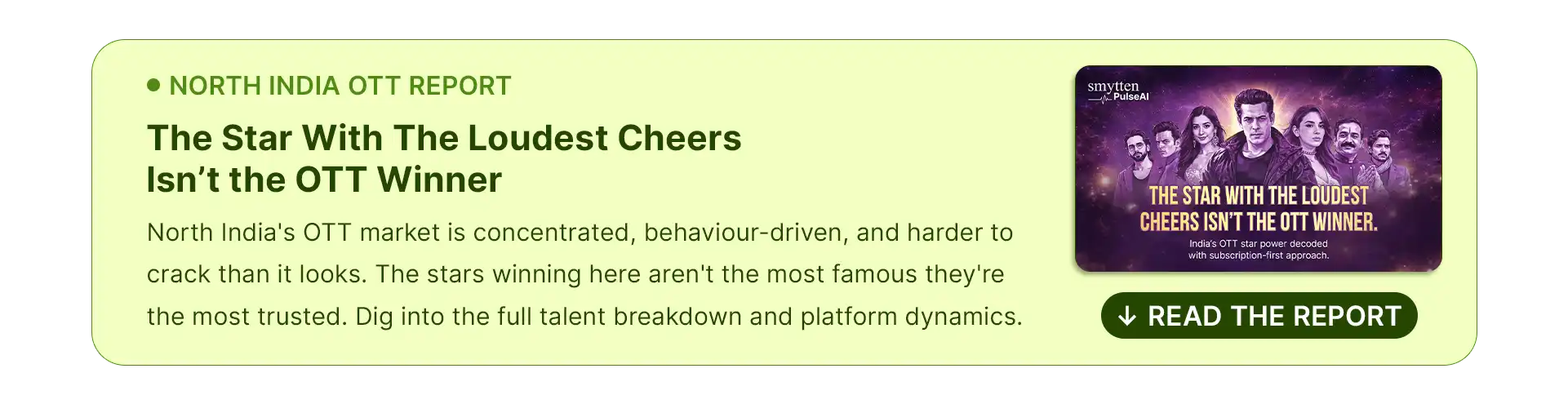
The full comparative report maps the complete picture — star rankings by subscription pull, platform fragmentation, gender influence breakdown, and what it means for content and talent investment decisions.
Download Full Report ⬆️