


The Whey Indians Eat: How Indians Really Consume Protein
Most people believe they understand their protein intake quite well. It is something they actively track, discuss, and increasingly try to optimise through diet, supplements, and lifestyle choices.
However, when PulseAI Research studied 2,000 Indian consumers, ranging from fitness enthusiasts to casual eaters - a very different pattern emerged. What appears to be awareness on the surface often masks a deeper contradiction in how decisions are actually made.
This is not a nutrition gap alone. It is a decision clarity gap, where confidence, confusion, and behaviour coexist in unexpected ways.
THE PROTEIN PARADOX
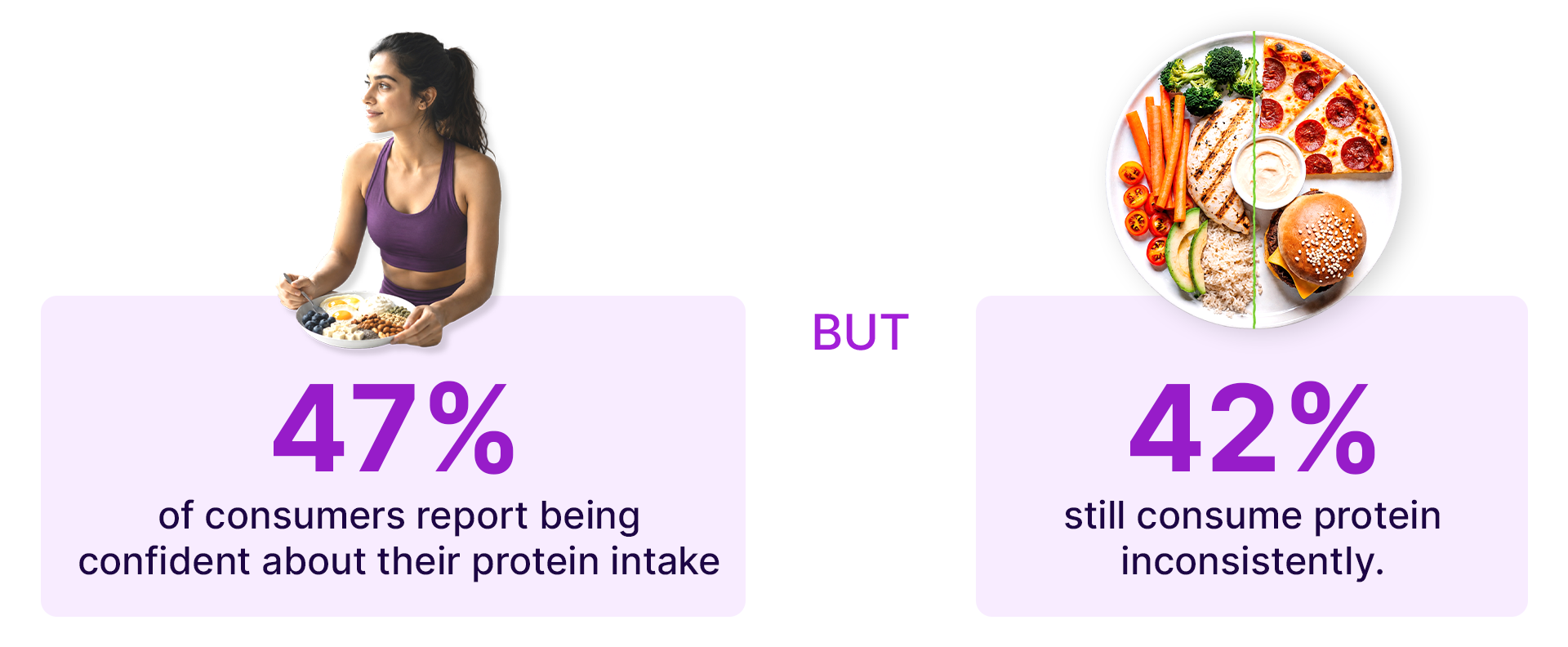
A strong pattern emerging from the study is the gap between perceived confidence and actual dietary behaviour. Consumers often believe they are meeting their protein needs effectively, yet their consumption patterns tell a different story.
Confidence in protein intake does not always translate into consistent behaviour.
What stands out:
- Confidence levels are high across consumers
- But daily protein intake remains inconsistent
- Self-assessment and reality often diverge
THE TRACKING ILLUSION
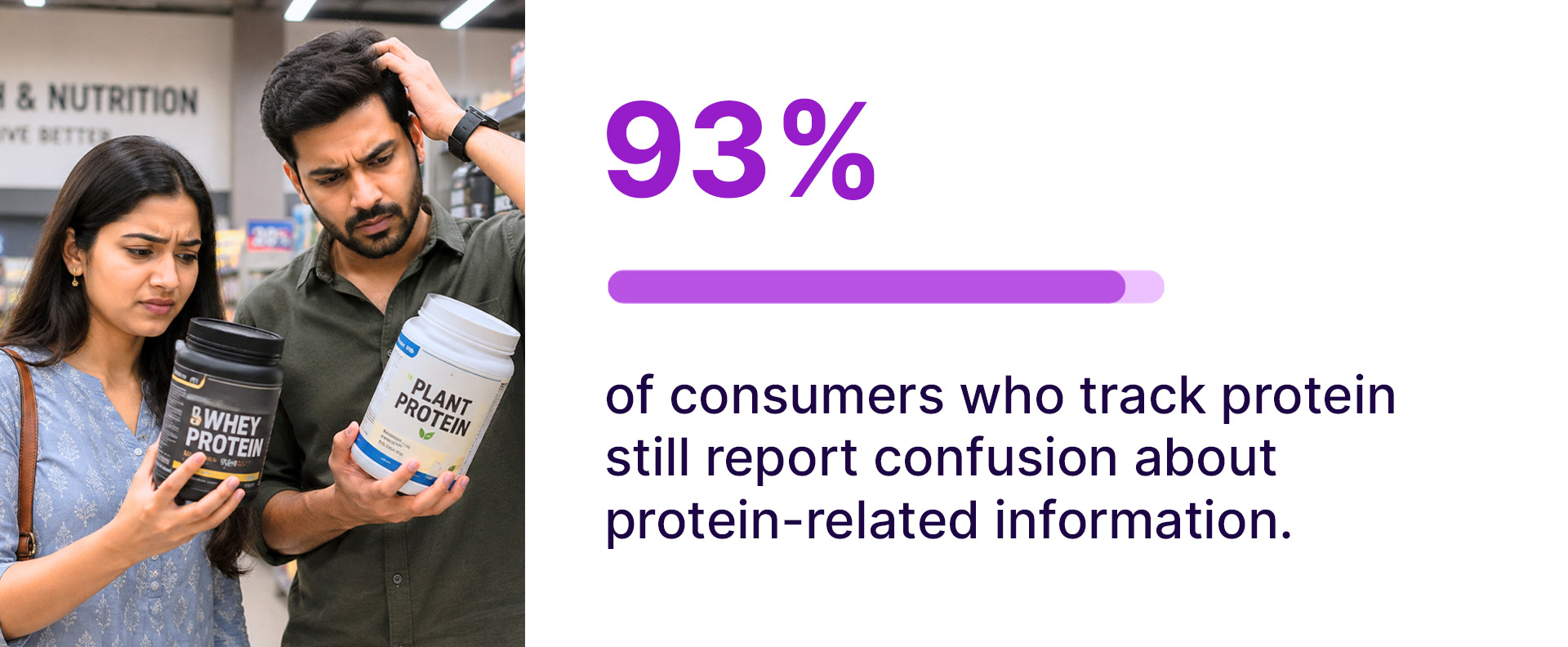
Tracking protein intake has become a common behaviour among health-conscious consumers. It is often assumed that tracking leads to better clarity and discipline.
But the data suggests otherwise.
Even among active trackers, confusion persists — indicating that the challenge is not access to information, but interpretation in real-life decision-making.
More tracking is not always equal to more clarity.
What this reveals:
- High tracking behaviour
- Persistent confusion despite tracking
- Information overload replacing clarity
SUPPLEMENTS VS REAL FOOD BEHAVIOUR
Protein supplements are now widely adopted, especially in urban diets. However, adoption does not mean replacement.
Consumption patterns show a layered structure where supplements and natural food sources coexist rather than compete.
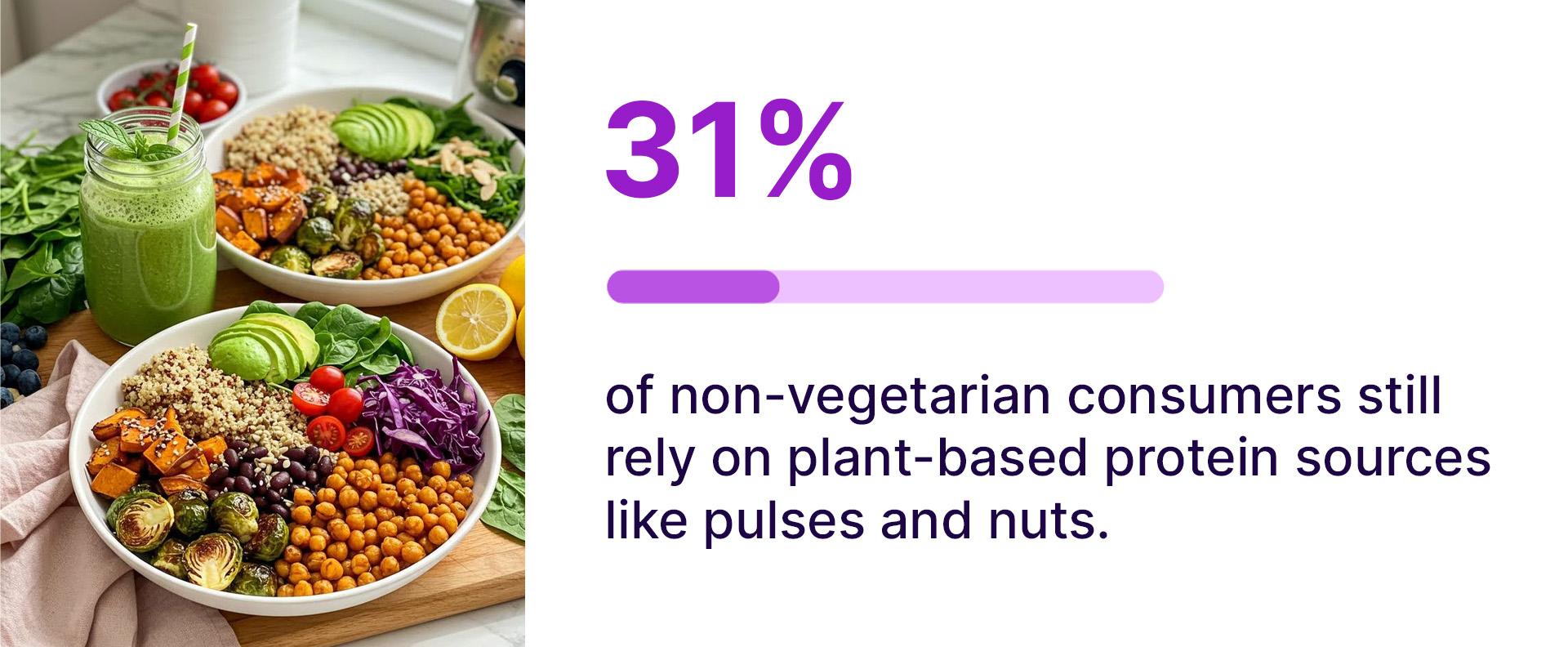
Even among non-vegetarian consumers, plant-based protein sources continue to hold relevance.
Behavioural reality:
- Supplements are additive, not substitutive
- Natural food remains a core protein source
- Protein consumption is multi-source, not binary
HOW PROTEIN DECISIONS ARE ACTUALLY MADE
Beyond tracking, diet type, and supplementation, the deeper insight from the study is behavioural structure.
Protein decisions are rarely purely rational. They are shaped by overlapping forces that operate simultaneously.
Core drivers of decision-making:
- Habit
- Confusion
- Self-research
- Perception
These forces interact continuously, often reinforcing or contradicting each other.
Protein decisions are shaped more by lived experience than structured knowledge.
WHAT THIS MEANS FOR BRANDS
The implication of this study goes far beyond protein.
It reveals a broader behavioural truth: consumers today are not lacking information — they are navigating too much of it without clarity.
This creates a new opportunity for brands.
Not just to educate.
But to simplify decision-making itself.
WHY THIS REPORT MATTERS
The full report, The Whey Indians Eat, by PulseAI Research breaks this behaviour down further across 2,000 consumers.
It maps:
- Confidence vs behaviour gaps
- Diet-based protein architecture
- Tracking vs confusion dynamics
- Real-world decision drivers
👉 Download the full report to explore how India really makes protein decisions — and what it means for your category.