


Solar Adoption in India: 92% Are Interested but Few Are Installing
 India is becoming one of the fastest-growing solar markets in the world.
But something doesn’t add up. Awareness is high. Intent is high. Even interest in adoption is extremely strong. Yet, when it comes to actual installations at the household level, the conversion drops sharply.
According to PulseAI Research’s latest consumer study, 92% of Indians are open to adopting solar energy a signal that should, in theory, translate into widespread adoption. But it doesn’t. Because -
Solar in India is not an awareness problem anymore. It is a confidence problem.
India already knows solar. The hesitation starts later.
Most consumers today are not discovering solar for the first time. They already know it exists. They already understand its benefits. And they already associate it with long-term savings.
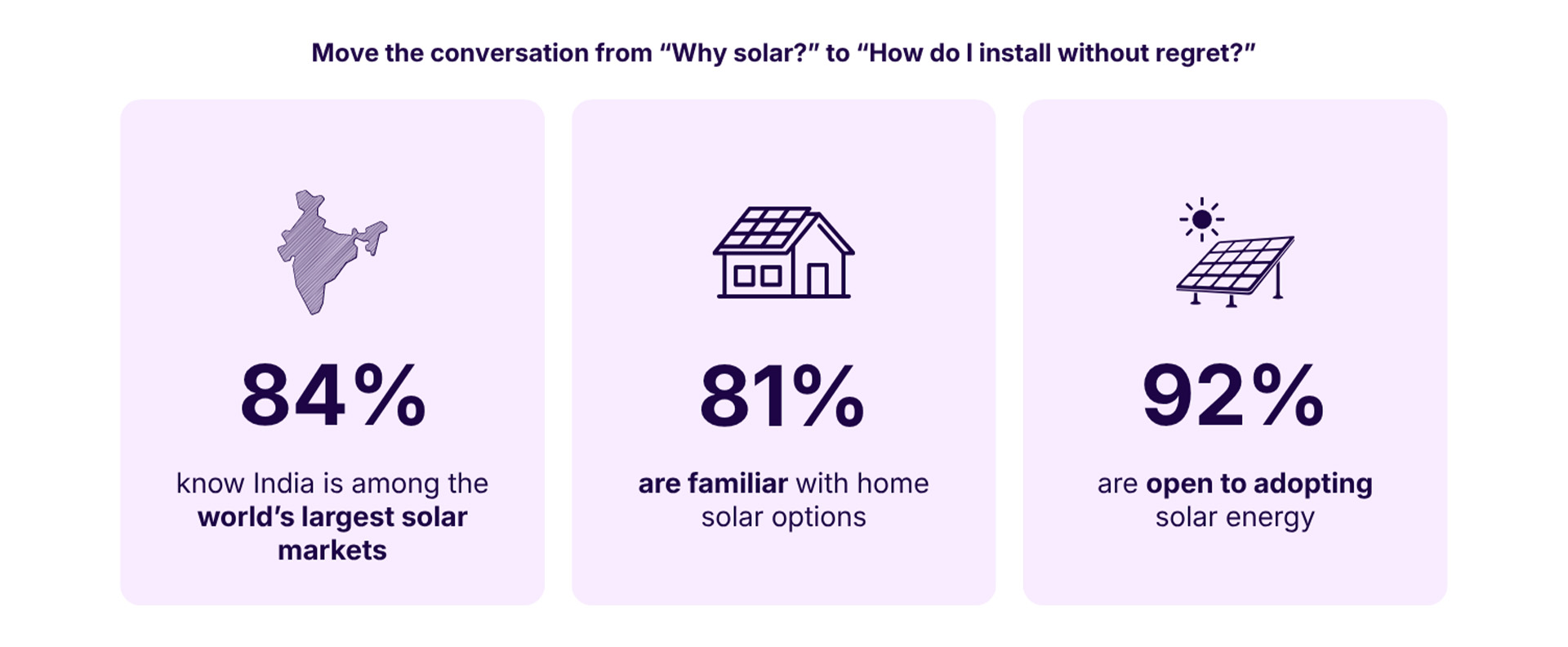
This changes the nature of the category completely. Because once awareness is solved, the real question becomes: “What happens after I install it?”
That single question is where the entire conversion funnel slows down. “I want it, but I’m not sure about it” When consumers explain why they are not installing solar today, the reasons are surprisingly grounded. It is rarely rejection. It is hesitation.
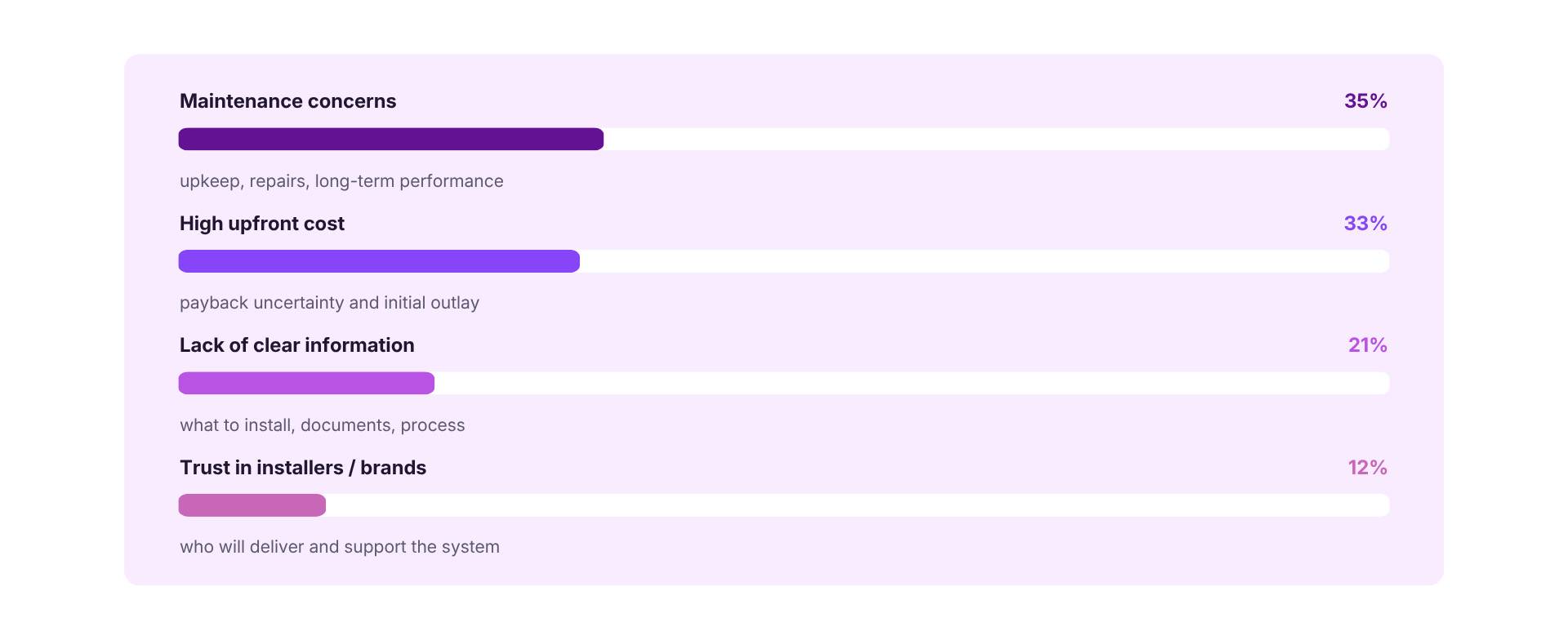
But underneath these answers is a much simpler emotion: uncertainty about ownership. Because solar is not seen as a product. It is seen as a long-term commitment.
The interesting part: demand is not weak. It is conditional.
One of the strongest signals from the study is that intent is extremely high—but only when the experience feels simple. When cost and setup feel reasonable, adoption intent rises sharply.
64% say they are very likely to install solar under favorable conditions. Another 28% are somewhat likely. That is nearly the entire market expressing willingness.
And when asked about preferred formats, one answer dominates clearly. Rooftop solar is the default mental model for most consumers today. 69% prefer rooftop solar panels as their primary solution. This is not a discovery problem. It is a decision friction problem.
What is really happening between interest and installation
The gap is not caused by a single barrier. It is created by layers of small uncertainties that accumulate during decision-making. Consumers are not blocked by solar itself. They are blocked by what solar feels like to own.
Maintenance becomes a silent concern who fixes it, who supports it, how reliable it will be over time. Cost becomes a mental calculation problem what is the real monthly impact, not just the upfront number. And information becomes noise, too many vendors, too many promises, not enough structured clarity. None of this stops interest. But it slows action.
So what actually changes conversion?
Not more awareness.
Not more messaging.
Not more persuasion.
What changes conversion is clarity. When consumers understand:
- what they will save every month
- who will maintain the system
- what happens after installation
- and how predictable the journey is
The decision becomes significantly easier. This is why rooftop solar, despite being a high-ticket category, already leads preference. Because it is the most “mentally visible” version of solar.
Solar adoption will not be driven by awareness
It will be driven by confidence. India already has the demand curve. What it is missing is a reduction in perceived risk at the point of decision. When that changes, adoption does not need to be pushed. It unlocks.
Why this matters for PulseAI Research
What this study reveals is not just a solar insight. It is a broader truth about consumer behavior in high-consideration categories. People rarely fail to understand products. They fail when the decision feels uncertain.
This is exactly where PulseAI Research operates.
We help brands understand not just what consumers say, but what actually stops them from acting. Across solar, fintech, FMCG, mobility, and other complex categories, we decode real decision behavior not assumptions. And we do it fast.
In just 72 hours, PulseAI can run deep consumer research for your category or brand, helping you identify what is blocking conversion and what will unlock it. Because growth doesn’t come from more data. It comes from clearer decisions.