


Beyond Protein Shakes: What India’s Next Generation of Protein Drinks Needs to Deliver


A protein drink solves for convenience. It doesn't automatically solve for trust, and real consumer research shows that gap is exactly where the next generation of protein products needs to focus.
Quick Answer
- India's protein drink market sits at a specific tension point: convenience-driven format, trust-driven purchase decision
- Real research shows natural food remains more trusted than supplements, even among consumers who use supplements daily, a genuine product-development challenge for any drink format
- 67% of consumers struggling with daily protein requirements prefer affordable solutions over other forms of support
- Different from the full protein market, which covers the entire category; this page focuses specifically on what consumers want from drinkable, convenience-format protein products
- The real opportunity isn't a new flavor, it's making protein genuinely easier to understand
Introduction
Protein drinks promise something specific: the protein benefit without the prep, the shaker, the powder mess. That convenience is real, and it's not automatically enough. Real consumer research shows the same population reaching for convenient formats still trusts natural food more than supplementation, a genuine tension any protein drink brand has to solve for, not just a marketing detail to smooth over.
This guide covers:
- Whether India's protein drink category is actually ready for its next growth phase
- What consumers say they actually want from protein products
- The specific convenience-versus-trust challenge protein drinks face
- What dietary segments mean for drink formulation specifically
Is India's Protein Drink Market Ready for the Next Growth Phase?
- Underlying demand conditions are strong. Protein has become a genuine daily habit for a large share of consumers, and supplement use has normalized well beyond a niche, fitness-only audience.
- The readiness question isn't about interest, it's about trust. Consumers are engaged with protein broadly; the open question is whether a convenience-format product can earn the same confidence natural food already holds.
- Real barriers are informational, not purely economic. The friction protein drink brands need to solve isn't primarily "consumers can't afford this," it's "consumers aren't sure this is the right choice."
- This connects directly to the full protein market picture, where the underlying category shows exactly this kind of engaged-but-uncertain consumer profile.
What Consumers Actually Want From Protein Products
Real PulseAI research gives a direct, specific answer here. Among consumers struggling with their daily protein requirements, 67% prefer affordable solutions over other forms of support. But affordability isn't the only thing consumers are asking for:
- Personalized diet plans rank among the most requested solutions
- Better product transparency is a distinct, separately requested need
- Clear guidelines from experts are wanted specifically, not just more general content
- Educational content rounds out the picture, consumers want to understand, not just be sold to
This is, in effect, a product innovation roadmap already handed to brands by real consumer research, not a generic wishlist.
Convenience vs Trust: The Protein Drink Challenge
This is the central tension protein drink brands actually need to solve.
- Protein drinks are built for convenience. That's the format's whole value proposition, and it genuinely delivers on it.
- Natural food remains more trusted than supplements, even among daily supplement users. A meaningful share of consumers who use protein supplements every day still believe natural food is the better protein source.
- This creates a real, specific product-development question. How can a protein drink deliver the convenience of supplementation without losing the trust consumers already place in natural, whole-food sources?
- The answer likely isn't just reformulation. It's positioning and transparency that actively bridges the gap, rather than asking consumers to simply trade trust for convenience.
Comparison: What Consumers Trust vs What They Reach For
Natural Food
- Trust level: Higher, even among supplement users
- Convenience: Lower, requires preparation
- Consumer perception: The "real" source
Protein Drinks / Supplements
- Trust level: Present but secondary to natural food
- Convenience: Higher, ready-to-consume
- Consumer perception: A convenient addition, not a full replacement
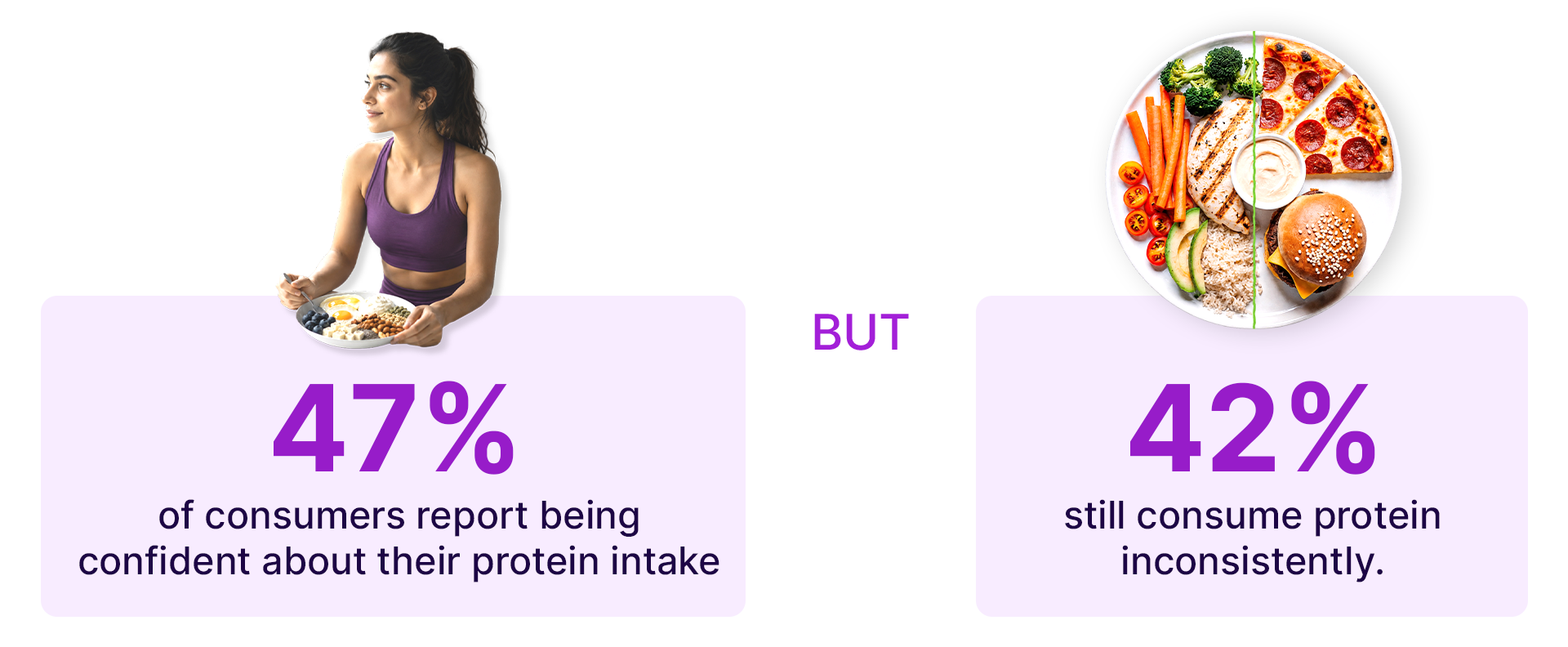
What Influences Protein Product Choice?
- Fitness goals remain a genuine driver of supplement and drink format adoption specifically
- Weight management functions as a distinct motivation, not interchangeable with fitness performance goals
- Affordability shapes format choice directly, especially for the segment already struggling to meet daily protein requirements
- Dietary preference determines which formats are even considered in the first place, vegetarian, vegan, and eggetarian consumers each face a genuinely different starting point
- Transparency increasingly functions as a purchase driver, not just a compliance requirement
- Expert guidance, though currently limited in reach, carries real influence where it does exist
- Perceived nutritional value matters independently of actual nutritional content, shaping choice even when the underlying product profile is similar
- Convenience remains the format's core appeal, the reason a drink gets chosen over a shake made from powder in the first place
What Dietary Segments Mean for Protein Drink Brands
Real dietary sourcing data has direct implications for drink formulation specifically, not just general category understanding:
- Vegetarian consumers lean heavily on pulses, dairy, and nuts as existing protein sources, meaning a plant-or-dairy-based drink format has genuine, pre-existing dietary familiarity to build on
- 31.4% of non-vegetarian consumers still rely partly on plant-based sources like pulses and nuts, suggesting hybrid or plant-forward drink formulations have real crossover appeal beyond a strictly vegetarian audience
- This directly informs format strategy: plant protein drinks, dairy-based drinks, hybrid formulations, and vegan products aren't just ethical or dietary niches, they map onto genuine, sizable existing consumption patterns
- A single, generic drink formulation misses this fragmentation. The dietary segments that shape whole-food protein choices shape drink-format preference too
Want to see the consumer data behind this finding? Explore The Whey Indians Eat, PulseAI Research's latest consumer intelligence report.
The Opportunity: Make Protein Easier to Understand
The clearest, most direct opportunity in this category isn't a new flavor or format innovation. It's addressing the confusion consumers already report wanting help with:
- Clear expert guidelines, specific and credible, not generic wellness content
- Affordable options, the most explicitly requested solution among struggling consumers
- Better product transparency, communicated directly on-pack and in marketing, not buried in fine print
- Educational content, helping consumers actually understand what they're choosing, not just persuading them to choose
- Personalized diet plans, moving beyond one-size-fits-all messaging toward guidance that reflects a specific consumer's actual situation
Together, this is essentially a product and marketing roadmap that real consumer research has already outlined, not something brands need to guess at.
Common Mistakes in Approaching the Protein Drink Opportunity
- Treating convenience alone as sufficient differentiation. Convenience is real, but it doesn't resolve the trust gap that keeps natural food ahead in consumer perception.
- Assuming affordability is the only lever worth pulling. It's the most requested solution, but transparency, guidance, and education matter too, and addressing only price leaves real demand unmet.
- Building one generic formulation for the whole market. Dietary fragmentation means plant-based, dairy-based, and hybrid formats each serve genuinely different existing consumption patterns.
- Leading with product claims instead of addressing confusion directly. Consumers have explicitly said what would help them; ignoring that request in favor of generic marketing misses a real, stated opportunity.
PulseAI Research Insight
Most protein drink strategy starts with format and flavor. Real consumer research suggests starting with trust and clarity instead.
PulseAI Research surfaced exactly this insight, using Smytten's network of 30M+ active Indian consumers:
- Direct consumer input on what would resolve their protein confusion, not assumption about what they want
- Dietary segmentation data with real formulation implications, not just general demographic detail
- The convenience-trust tension identified explicitly, a genuine product strategy insight, not a marketing afterthought
- 72-hour turnaround, delivering research brands can act on before a formulation or positioning decision locks in

How Brands Can Use This
- Address the trust gap directly, not just the convenience proposition. A drink that only sells convenience is competing on the format's weakest dimension relative to natural food.
- Prioritize affordability as the most explicitly requested solution, while not treating it as the only lever worth pulling.
- Build formulation strategy around real dietary segments, plant-based, dairy-based, and hybrid, rather than one generic product.
- Lead marketing with transparency and education, directly addressing the confusion consumers have already named.
- Treat this as a genuine product roadmap, not just a messaging exercise, since the underlying research points to real formulation and positioning implications.
Related Concepts
But understanding what consumers want from protein products requires looking beyond product categories entirely to the full research behind these findings: The Whey Indians Eat.
- Protein market — the full category, consumer demand, and segmentation landscape this drink-specific analysis sits within
- India's protein grey market — the trust and authenticity dynamics that shape convenience-format product decisions too
- Pricing analytics — deeper methodology behind affordability and willingness to pay
- Market opportunity analysis — assessing whether a specific product opportunity is genuinely worth pursuing
FAQs
1.What do Indian consumers actually want from protein drinks?
Real research shows affordability is the most requested solution among consumers struggling to meet daily protein needs (67%), alongside personalized diet plans, better product transparency, clear expert guidelines, and educational content.
2.Why don't protein drinks automatically earn the same trust as natural food?
Because convenience and trust are different dimensions. Even consumers who use protein supplements daily still often regard natural food as the more trustworthy protein source, meaning a convenient format doesn't automatically resolve the underlying trust question.
3.What dietary segments matter most for protein drink formulation?
Vegetarian, non-vegetarian, and hybrid dietary patterns all shape format preference. Notably, a meaningful share of non-vegetarian consumers still rely partly on plant-based protein sources, suggesting real crossover appeal for plant-forward or hybrid drink formulations.
4.Is affordability the biggest opportunity in India's protein drink market?
It's the most explicitly requested solution among consumers struggling with protein needs, but real research also shows demand for transparency, expert guidance, and education, meaning affordability alone doesn't address the full opportunity.
5.How is the protein drink market different from the broader protein market?
The broader protein market spans all sources, natural foods, dairy, pulses, supplements, and more. The protein drink market specifically addresses convenience-format, ready-to-consume products, a narrower category with its own distinct trust and formulation challenges.
6.What is the biggest mistake protein drink brands make?
Treating convenience as the whole value proposition without addressing the trust gap that keeps natural food ahead in consumer perception, or building one generic formulation instead of addressing genuine dietary segment differences.
7.Where can I see the full consumer research behind these protein drink findings?
The complete findings, including the convenience-trust dynamic and dietary segmentation data, come from PulseAI Research's The Whey Indians Eat consumer intelligence report.
Read Similar Blogs
Read Similar Blogs
10 Market Research Techniques That Actually Deliver InsightsMarket Research Steps: A Practical Framework for Brand Teams Who Need...Primary Research: A Practical Guide for Brand TeamsConsumer Insights Data: From Evidence to Brand ActionHow to Create a Survey Questionnaire That Delivers Reliable ResultsDifference Between Research Method and Research Methodology: Clearing Up the...Where Market Research Is Headed: Trends Brands Can’t IgnoreQualitative Consumer Research: Why Customers Behave This WayBrand Health vs Brand Equity: Key Metrics and DecisionsConsumer Research Methodology: A Step-by-Step GuideConfusing Survey Questions: 25 Examples and How to Fix ThemWhy Customers Buy: Consumer Behaviour Insights for BrandsObjectives of Marketing Research: The Real DistinctionAdvanced AI Research Methods in Market Research MetaQuestionnaire Answer Choices (2026): How to Write Options That Improve Data...Quantitative vs Qualitative Consumer Research: Which One?Consumer Insights Platform: What It Is and How to Choose OneFeedback Survey Questions Template: Designing Surveys That Turn Input Into...Structured vs Unstructured Questionnaire: Which to UseHow to Build a High-Performing Marketing Research Team That Drives Business...
10 Market Research Techniques That Actually Deliver InsightsMarket Research Steps: A Practical Framework for Brand Teams Who Need...Primary Research: A Practical Guide for Brand TeamsConsumer Insights Data: From Evidence to Brand ActionHow to Create a Survey Questionnaire That Delivers Reliable ResultsDifference Between Research Method and Research Methodology: Clearing Up...Where Market Research Is Headed: Trends Brands Can’t IgnoreQualitative Consumer Research: Why Customers Behave This WayBrand Health vs Brand Equity: Key Metrics and DecisionsConsumer Research Methodology: A Step-by-Step GuideConfusing Survey Questions: 25 Examples and How to Fix ThemWhy Customers Buy: Consumer Behaviour Insights for BrandsObjectives of Marketing Research: The Real DistinctionAdvanced AI Research Methods in Market Research MetaQuestionnaire Answer Choices (2026): How to Write Options That Improve...Quantitative vs Qualitative Consumer Research: Which One?Consumer Insights Platform: What It Is and How to Choose OneFeedback Survey Questions Template: Designing Surveys That Turn Input Into...Structured vs Unstructured Questionnaire: Which to UseHow to Build a High-Performing Marketing Research Team That Drives...