


India’s Protein Market Is Changing: The Consumer Shifts Brands Can’t Afford to Ignore


India's protein market isn't one market with one consumer. It's a fragmented landscape of sources, motivations, and confidence levels, and understanding that fragmentation matters more than any single growth statistic.
Quick Answer
- India's protein market spans far more than supplements, natural foods, dairy, pulses, nuts, eggs, and meat all function as real, competing protein sources
- The protein consumer isn't one consumer. Real PulseAI research identifies 4 distinct behavioral segments, not a single, unified demand profile
- The biggest gap isn't consumption, it's clarity. Consumers aren't failing to get enough protein; they're navigating fragmented confidence and unclear decision frameworks
- This guide avoids speculative market-size figures, focusing instead on the consumer-intelligence angle no generic market overview provides
- Different from India's protein grey market, which covers the trust and counterfeit angle specifically; this page covers the full category
Introduction
Most "protein market" content defaults to a growth chart and a valuation figure. That's not what actually helps a brand operating in this category. What matters more is understanding who the protein consumer actually is, what's genuinely driving demand, and where real confusion still sits inside a category that looks, on the surface, highly engaged.
This guide covers:
- Why the protein market is bigger than supplements alone
- What's actually driving demand across different motivations
- The 4 distinct consumer segments real research identifies
- The trends brands should be watching, and the real gap underneath all of them
India's Protein Market Is Bigger Than Supplements
Real PulseAI research makes this point directly: protein decisions in India span far more than the supplement aisle.
- Vegetarian consumers source protein primarily from pulses and legumes (24.7%) and dairy (24.9%), with nuts and seeds (21.5%) and protein supplements (18.7%) playing meaningful but secondary roles
- Even non-vegetarian consumers aren't exclusively animal-protein reliant. 31.4% of non-vegetarian respondents still rely on plant-based sources like pulses and nuts as part of their protein intake
- Meat and fish represent a smaller share than commonly assumed, at just 7.4% among the sourcing options tracked
- The "protein equals supplements" narrative genuinely oversimplifies the category. Real consumer behavior is dictated by dietary context first, supplement use second
This reframes the category: a brand thinking only about the supplement aisle is missing the dietary and natural-food competition shaping actual consumer choice.
What's Driving India's Protein Demand?
- Fitness remains a significant driver, with 39% of consumers reporting they consume protein supplements specifically for fitness goals
- Weight management is a distinct, separate motivation, cited by 22% of consumers, a meaningfully different driver than performance-focused fitness use
- General health and wellness increasingly rivals fitness as a motivation, reflecting a broader shift beyond athletic performance alone
- Expert influence plays a real but limited role, with only 19% of consumers guided by doctors or nutritionists specifically, leaving substantial room for other information sources to shape decisions
- Self-research is a major, independent driver. Consumers increasingly research their own protein needs directly, a pattern with real implications for how brands should structure educational content
- Convenience and dietary preference both shape which protein source wins, not just which brand
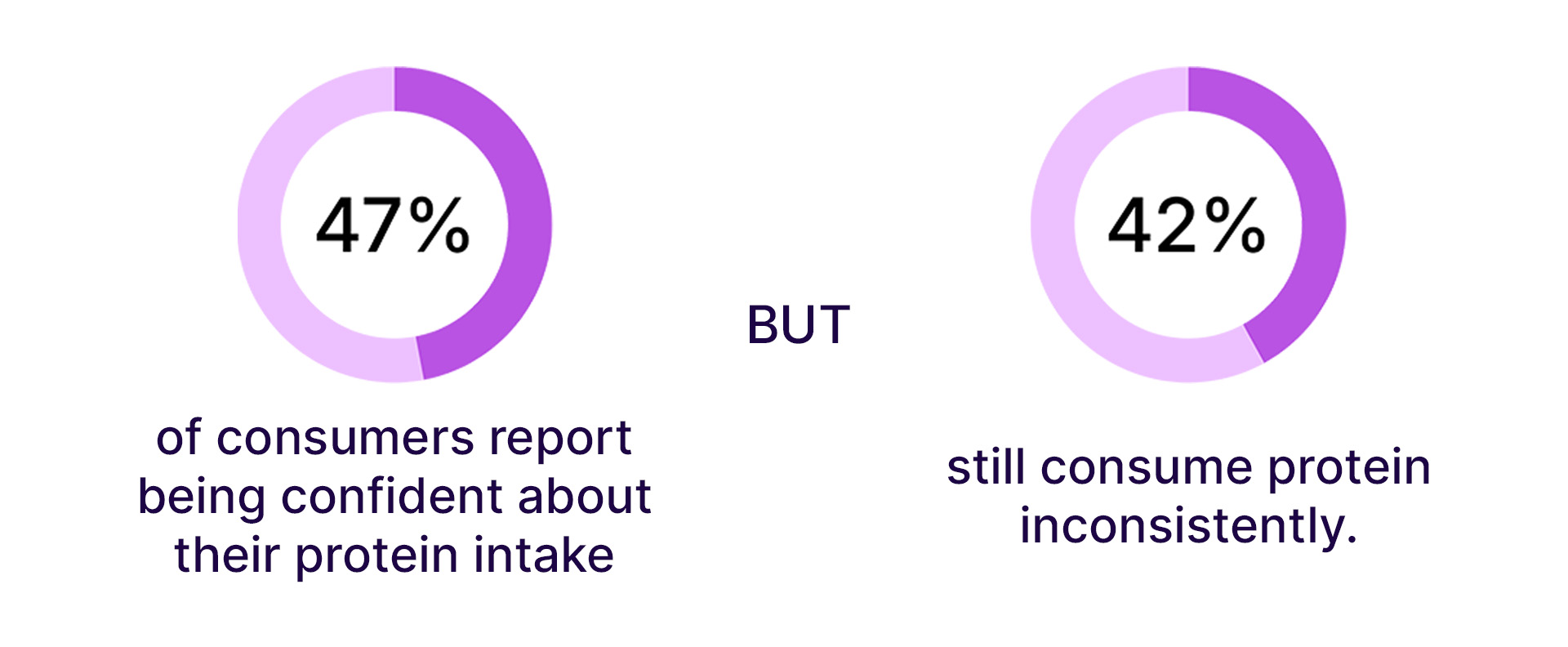
The Protein Consumer Is Not One Consumer
This is where the real research adds genuine differentiation beyond a generic category overview. PulseAI's own segmentation identifies 4 distinct behavioral clusters:
Confident but Confused
Tracks protein regularly, still reports confusion despite that engagement, representing an "information overload" segment that consumes actively without full clarity.
Trackers with Uncertainty
Tracks protein occasionally or inconsistently, with confidence varying depending on the source, an "inconsistent engagement" segment.
Supplement-Dependent Users
Daily supplement users where no single belief system dominates decision-making, a "behavior-led consumption" segment driven more by habit than a coherent framework.
Cost-Constrained Users
Split between perceiving protein as affordable versus expensive, where cost functions as a perception-driven factor rather than an absolute barrier, a "pricing perception" segment.
Comparison: The 4 Protein Consumer Segments
Confident but Confused
- Behavior: Regular tracking
- Core issue: Confusion despite engagement
Trackers with Uncertainty
- Behavior: Inconsistent tracking
- Core issue: Variable confidence by source
Supplement-Dependent Users
- Behavior: Daily supplement use
- Core issue: No unified belief system
Cost-Constrained Users
- Behavior: Price-sensitive perception
- Core issue: Perception-driven, not absolute, barrier
Protein Market Trends Brands Should Watch
- Protein is becoming a genuine daily habit, not an occasional supplement. Around half of consumers include protein in every meal, and roughly half consume protein supplements daily specifically
- Supplement use has normalized into mainstream behavior. Daily supplement habits are now common, not a niche, fitness-only practice
- Self-research is reshaping how consumers form protein beliefs. A substantial share of self-research-driven consumers report very high confidence in understanding their own needs
- Label reading is already a widespread, active behavior. Nearly 1 in 2 consumers always check nutrition labels, making label clarity a genuine point of competitive differentiation
- Demand for simplified guidance is explicit, not assumed. When asked what would resolve their protein confusion, consumers cited personalized diet plans, better transparency, and affordable options among the top solutions
- Dietary fragmentation is a structural, ongoing reality. Vegetarian, non-vegetarian, eggetarian, and vegan consumers all navigate genuinely different protein-sourcing decisions
- Value isn't just about price, it's about trust in the source. Natural food remains strongly regarded relative to supplements even among consumers who use supplements daily, a dynamic explored in full in India's protein drink market
The Biggest Gap in India's Protein Market Isn't Consumption, It's Clarity
This is the single most important, differentiated finding in the entire category. Real PulseAI research is direct on this point: Indian consumers aren't broadly failing to consume enough protein. What they're actually navigating is fragmented confidence, inconsistent beliefs about protein sources and adequacy, and a lack of clear, simple decision frameworks for what "enough" protein actually means for them personally.
- 68% believe they're already meeting their protein needs
- 83% simultaneously report confusion about protein information
- 93% of regular trackers still report that same confusion, meaning tracking behavior doesn't resolve it
That combination, high self-reported confidence sitting alongside high self-reported confusion, is the real story underneath every growth statistic a generic market overview might lead with.
What India's Protein Market Means for Brands
- Product positioning should reflect the full category, not just the supplement aisle. Messaging that only competes against other supplement brands misses the dietary and natural-food alternatives consumers are actually weighing.
- Education is a genuine differentiator, not a compliance afterthought. With 83% reporting confusion and only 19% guided by experts, brands willing to provide clear, credible guidance fill a real, underserved gap.
- Transparency should be a leading message, not a footnote. Consumers explicitly cite it among their top requested solutions when confused.
- Segmentation should reflect the 4 real behavioral clusters, not a single, generic "protein consumer" persona.
- Pricing strategy should account for existing affordability perception. With most consumers already perceiving protein as affordable, competing purely on price doesn't address the deeper decision-making gap.
- Messaging should account for dietary fragmentation. A vegetarian consumer's protein decision genuinely differs from a non-vegetarian's, even when both are shopping the same category.
- Research-led innovation should target the confidence-confusion gap directly, not just product reformulation, since the data shows the real problem is decision clarity, not lack of consumption.
PulseAI Research Insight
Most protein market content leads with a growth number. The real, differentiated insight sits underneath: consumers are engaged and still confused, and that gap is where the real opportunity for brands actually lives.
PulseAI Research produced exactly this depth of category intelligence, using Smytten's network of 30M+ active Indian consumers:
- A full, 1,000-respondent PAN India study, combining quantitative and qualitative methodology
- Genuine behavioral segmentation, 4 distinct consumer clusters, not a single blended average
- Findings translated into direct brand implications, not just raw statistics
- 72-hour turnaround, delivering category intelligence brands can act on quickly

Related Concepts
One category worth watching closely is protein beverages, where the same fragmentation and trust dynamics play out in a genuinely new product form. See the full picture in India's protein drink market.
- India's protein grey market — the trust and counterfeit-vulnerability angle within this same category
- Pricing analytics — deeper methodology behind value perception and willingness to pay
- Category benchmarking — understanding brand position within a broader category shift
- Market opportunity analysis — assessing genuine opportunity beyond category size alone
- Brand tracking metrics — measuring trust and clarity perception at the brand level over time
FAQs
1.What does India's protein market actually include?
Far more than supplements. Real consumer research shows protein decisions span natural foods, dairy, pulses and legumes, nuts and seeds, packaged high-protein foods, eggs, meat and fish, and supplements, with dietary context shaping sourcing more than brand alone.
2.What is driving demand for protein products in India?
A combination of fitness goals (39% of supplement users), weight management (22%), general health and wellness, self-research, dietary preference, and a limited but real role for expert guidance from doctors or nutritionists (19%).
3.Is the Indian protein consumer a single, unified customer type?
No. Real segmentation research identifies 4 distinct behavioral clusters: confident but confused, trackers with uncertainty, supplement-dependent users, and cost-constrained users, each with genuinely different decision patterns.
4.What is the biggest challenge in India's protein market?
Not consumption volume, but decision clarity. Research shows 83% of consumers report confusion about protein information, and that confusion persists even among the 93% of regular trackers who still report it despite active engagement.
5.Do price differences meaningfully shape protein purchase decisions in India?
Price plays a role, but most consumers already perceive protein as broadly affordable, a dynamic explored in full in India's protein drink market, meaning price positioning alone doesn't address the deeper confidence and clarity gap driving actual decisions.
6.How should brands approach India's fragmented protein market?
By segmenting messaging around the real behavioral clusters rather than a single generic protein consumer, leading with transparency and education, and accounting for how dietary preference shapes which protein sources a given consumer actually considers.
7.Where can I see the full research behind these protein market findings?
The complete findings, including the 4-segment framework, dietary sourcing breakdown, and confidence-confusion data, come from PulseAI Research's The Whey Indians Eat study.
Read Similar Blogs
Read Similar Blogs
10 Market Research Techniques That Actually Deliver InsightsMarket Research Steps: A Practical Framework for Brand Teams Who Need...Primary Research: A Practical Guide for Brand TeamsConsumer Insights Data: From Evidence to Brand ActionHow to Create a Survey Questionnaire That Delivers Reliable ResultsDifference Between Research Method and Research Methodology: Clearing Up the...Where Market Research Is Headed: Trends Brands Can’t IgnoreQualitative Consumer Research: Why Customers Behave This WayBrand Health vs Brand Equity: Key Metrics and DecisionsConsumer Research Methodology: A Step-by-Step GuideConfusing Survey Questions: 25 Examples and How to Fix ThemWhy Customers Buy: Consumer Behaviour Insights for BrandsObjectives of Marketing Research: The Real DistinctionAdvanced AI Research Methods in Market Research MetaQuestionnaire Answer Choices (2026): How to Write Options That Improve Data...Quantitative vs Qualitative Consumer Research: Which One?Consumer Insights Platform: What It Is and How to Choose OneFeedback Survey Questions Template: Designing Surveys That Turn Input Into...Structured vs Unstructured Questionnaire: Which to UseHow to Build a High-Performing Marketing Research Team That Drives Business...
10 Market Research Techniques That Actually Deliver InsightsMarket Research Steps: A Practical Framework for Brand Teams Who Need...Primary Research: A Practical Guide for Brand TeamsConsumer Insights Data: From Evidence to Brand ActionHow to Create a Survey Questionnaire That Delivers Reliable ResultsDifference Between Research Method and Research Methodology: Clearing Up...Where Market Research Is Headed: Trends Brands Can’t IgnoreQualitative Consumer Research: Why Customers Behave This WayBrand Health vs Brand Equity: Key Metrics and DecisionsConsumer Research Methodology: A Step-by-Step GuideConfusing Survey Questions: 25 Examples and How to Fix ThemWhy Customers Buy: Consumer Behaviour Insights for BrandsObjectives of Marketing Research: The Real DistinctionAdvanced AI Research Methods in Market Research MetaQuestionnaire Answer Choices (2026): How to Write Options That Improve...Quantitative vs Qualitative Consumer Research: Which One?Consumer Insights Platform: What It Is and How to Choose OneFeedback Survey Questions Template: Designing Surveys That Turn Input Into...Structured vs Unstructured Questionnaire: Which to UseHow to Build a High-Performing Marketing Research Team That Drives...